

Nasal Breathing. The Secret Sauce to great health, great endurance, low anxiety, and balanced craniofacial development. Rather than simply telling you this, I want to help you understand why.
Humans are obligate nasal breathers. By design, we exclusively breathe through our nose when not under heavy exertion. Our body needs this in order to be in parasympathetic rest-digest-repair mode during most of the day and all of the night.
- We should breathe through our nose at rest, throughout the day and night.
- We should breathe through our nose with light activity.
- We should breathe through our nose while speaking.
- We should breathe through our nose while eating.
The mouth is the back-up hole, reserved for emergency use only during physical stressors. Our body needs this to shift to sympathetic fight-or-flight mode and handle business.
- We breathe through our mouth when running from a tiger.
- We breathe through our mouth when exercising.
- We breathe through our mouth as an emergency backup when sick and congested.
Proper nasal breathing is the key to a balanced autonomic nervous system (ANS). Nasal breathing activates the restful parasympathetic arm of the ANS. This reduces stress, reduces anxiety, and reduces systemic inflammation. Proper nasal breathing is slow and silent. Each slow inhale fills the lungs fully with air, allowing the ribcage to expand 360 degrees in all directions, and the diaphragm to contract downward. The exhale should be slow and silent through the nose, ideally 1.5 to 2 times longer than the inhale. This allows for proper oxygen/carbon dioxide balance to oxygenate the brain and body for healing calm restoration. Upper body posture should have the shoulders upright (not slouched forward) and the chest open to allow the lungs to fully fill.
Mouth breathing is physiologically stressful breathing that activates the fight-or-flight sympathetic arm of the ANS. This increases stress, increases anxiety, and increases systemic inflammation. The larger hole moves too much air too quickly. While this is a great mechanism for exercise and panicked situations when you want your heart racing and your body in performance mode, it is the enemy of a calm and restored body and mind. This rapid and heavy breathing only utilizes the upper part of the lungs, only expanding the upper chest in what is referred to as shallow chest breathing. Too much carbon dioxide is exhaled through the mouth which creates an environment of low oxygenation of the brain and body tissues (see the Bohr Effect below), which in itself is a stressor. Habitual mouth breathing will often adversely affect posture by rolling/slouching the shoulders forward to accommodate shallow chest breathing.
The physiology of it all.
Nasal breathing is healthier for the lower airway and lungs.
When air enters through our nose, it is filtered, warmed, and humidified before descending the lower respiratory tract to the lungs. This means removal of pathogens, along with improved temperature and moisture levels that are in sync with the lower airway and lung surfaces. Air that enters through the mouth is unfiltered, cold, and dry.
Nasal breathing calms the nervous system.
Relaxed nasal breathing activates the parasympathetic nervous system, which is the calming branch of the autonomic nervous system. To break down the physiology of the breath a step further, the inhale is sympathetic and the exhale is parasympathetic. If you train your breathing for a more prolonged exhale (1.5 to 2 times longer than the inhale), not only will it further relax your body, but it can also improve your Heart Rate Variability (HRV), which is an indicator of health.
Nasal breathing is at the core of proper craniofacial development.
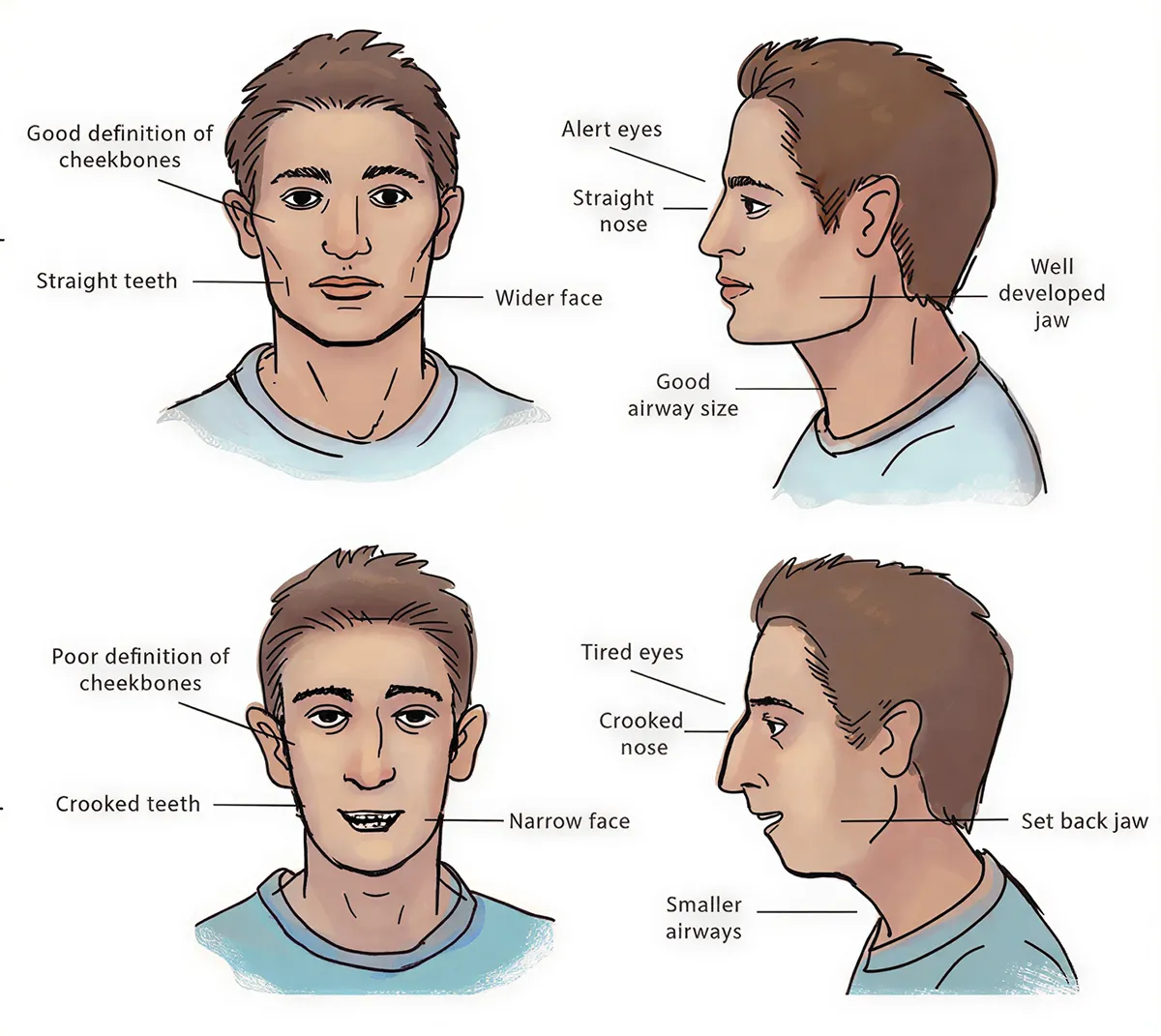
The balance required for proper forward and outward development of the jaws and lower half of the face is one hundred percent dependent on habitual nasal breathing. For optimal development of the lower face and of the airway behind it, the mouth must be closed, the lips must be closed, and the tongue must be up in the palate— the breath must be through the nose to facilitate this posture. In contrast, mouthbreathing brings the imbalance of an open mouth, open lips, and a low tongue. Not only do we lose the midface growth support of the tongue on the palate, we now have passive INward pressure of the cheeks on the teeth and jaws which is the opposite of the outward growth we need to achieve for optimal development. Craniofacial growth of a habitual mouth breather tends toward a longer face with crowded teeth and poorly defined facial structures. The lack of forward growth of the jaws risks a compromised airway behind them.
Nasal breathing improves restorative sleep.
Remember that nasal breathing activates the restful parasympathetic nervous system and mouth breathing activates the stress-response sympathetic nervous system. That alone reveals that sleep is more restorative with nasal breathing. When the mouth is closed with nasal breathing, the lower jaw and the airway behind it are stable, which prevents airflow disruptions to our sleep cycles. When the mouth is open with mouth breathing, the lower jaw drops back and the tongue collapses into the airway, which creates airway resistance and triggers a fight or flight response that will close the mouth to reopen and stabilize the airway. This sleep disordered breathing disrupts the restorative deep sleep and causes fragmentation of the sleep cycles. More on this in my blog on sleep.
Nasal breathing maximizes tissue oxygenation via the Bohr effect.
The smaller size of the nostrils, in comparison to the large size of the mouth hole, delivers the proper volume and speed of air for optimal gas exchange. This is very important with the exhale. If we exhale too much carbon dioxide (which is what happens when mouth breathing), then the body cannot oxygenate the tissues (organs, muscles, brain, etc) as well. This is called the Bohr effect—the process where increased carbon dioxide (CO2) and lower pH (higher acidity) in the blood cause hemoglobin to release oxygen (O2) more easily. It allows the body to deliver more oxygen to metabolically active tissues (brain, digestive system, exercising muscles).
Nasal breathing improves overall bodily function.
Remember, the body uses its time at rest wisely. Restoring and rejuvenating all organ systems, properly digesting food and absorbing nutrients, restoring the brain to maintain cognitive prowess—all these are things that we don’t want to skimp on because that will lead to varying degrees of chronic disease, digestive issues, and neurological dysfunction. Understanding the Bohr effect discussed above, we understand that the parasympathetic mode at rest will allow more efficient delivery of oxygen to metabolically active tissues at rest (brain, digestive system, and repairing organ systems). If we are nasal breathing at rest, then this all happens as designed in parasympathetic mode. If we are mouth breathing at rest, that hyperventilation blows off too much CO2, which lowers acidity and causes the hemoglobin in the blood to hold oxygen more tightly and not release it to the tissues that need it (brain, digestive system, organs) when at rest.
Nasal breathing improves athletic endurance.
During physical exertion, early nasal breathing will create an oxygen reserve for longer endurance. While heavy exertion and mouth breathing activate sympathetic mode, which instinctively dumps all available oxygen into the exercising muscles, it can’t keep up for long. When we breathe through the mouth exclusively, these muscles will get tired sooner, as we don’t have the oxygen reserve that we get with early nasal breathing during lighter exertion. If we can train our bodies to utilize the nose during light activity, this will greatly increase oxygen reserve, thus oxygenation of our muscles during heavier exercise.
Nasal breathing properly improves body posture.
With proper circumferential (ribcage expanding 360 degrees) and diaphragmatic (diaphragm lowering with contraction) movement, upper body posture is improved with the shoulders relaxed and upright, the head positioned directly over the shoulders, and the tongue resting on the palate. This proper breathing posture relieves tension in the jaw, neck, upper back, and all down the line.
Some Breathing Exercises to Get You Started
BREATHING EXERCISES TO
Improve breathing mechanics and calm the body.
Box Breathing. Either lay down flat on your back or sit up straight with shoulders upright. Tongue on the roof of your mouth. Slow and silent breathing through your nose. 4 count inhale—4 count pause—4 count exhale—4 count pause. Repeat for at least a couple of minutes. If a count of 4 seems like too much or too little for you, then adjust the time of the steps accordingly to best suit you.
4-7-8 Breathing. Either lay down flat on your back or sit up straight with shoulders upright. Tongue on the roof of your mouth. Slow and silent breathing through your nose. 4 count inhale — 7 count pause — 8 count exhale — Repeat for at least a couple of minutes. The goal is not to feel any stress from air hunger. If that pause and exhale is too long for you, then do a 4-5-6 rather than a 4-7-8.
Prolonged Exhale Breathing. Either lay down flat on your back or sit up straight with shoulders upright. Tongue on the roof of your mouth. Slow and silent breathing through your nose. Just inhale and exhale, no pauses. The focus here is simply to have the exhale be 1.5 to 2 times longer than the inhale. Remember, the exhale activates the calming parasympathetic nervous system, so this simple focus on duration is very effective.
BREATHING EXERCISES TO
Make the transition from mouth breathing to nasal breathing.
Buteyko breathing. There are a ton of free resources available for this. I strongly suggest downloading the Oxygen Advantage app to guide you through these simple and effective breathing exercises. You could also check out the Oxygen Advantage YouTube channel or the Buteyko Clinic International YouTube channel for more information. Any interviews you can find with Patrick McKeown are packed with information and technique.
BREATHING EXERCISES TO
Reinforce good body posture.
Circumferential 360° Diaphragmatic Breathing. With tongue resting on the palate, with shoulders upright, and with head over shoulders. Practice by sitting or standing against a wall. With butt/shoulders/head all in contact with the wall, practice deep slow nasal breathing, paying attention with the inhale to the ribcage expanding outward in all directions and the diaphragm contracting downward. Do this for 5 to 10 minutes.
BREATHING EXERCISES TO
Open a congested nose.
Buteyko Nose Unblocking Technique. Inhale and exhale normally through the nose, pinch your nose, and hold your breath while gently nodding your head until you feel a strong urge to breathe, then release your nose and return to normal inhale and exhale breathing through the nose. Repeat 5 times or as needed. This is a great instructional video for kids. And a video geared more toward adults
BREATHING EXERCISES TO
Gain more control over the autonomic nervous system (ANS).
Alternate Nostril Breathing. Sit up straight with shoulders upright. Tongue on the roof of your mouth. Bring your right hand to your nose, placing the thumb on the right nostril and the index finger on the left. Close the right nostril with the thumb and inhale deeply through the left nostril. Now close the left nostril with the index finger, release the right, and exhale completely. Inhale through the right nostril. Close the right nostril, release the left, and exhale. Repeat this cycle for a couple minutes. Always complete the practice by exhaling through the left side. This calms the nervous system. The right nostril activates the sympathetic nervous system, and the left nostril activates the parasympathetic nervous system.
Wim Hoff Method of Breathing. Wim Hoff has a method that some people find very effective in taking control of their ANS to reverse the effects of chronic stress. His method is not at all rooted in relaxation, but rather on purposefully putting the body in a state of high stress through stressful breathing patterns and/or extreme thermal (cold) exposure so that you can in turn train the body to find calm with a return to parasympathetic state following the abrupt and intentional sympathetic state. I encourage you to read his book and find him on YouTube to learn more about his method.
Struggling to Breathe through your nose? Here are some helpers.
If you have a feeling of air hunger, feeling like you can’t move enough air through your nose, nasal dilators come to the rescue.
If you are congested, nasal irrigation and natural nasal sprays are helpful tools.
Parents! Help kids develop good habits
Check in on them sleeping. If the mouth is open, gently push it closed from under the chin. Light pressure here will not only close the mouth, but will also push the tongue up to the roof of the mouth. Hold it for a few seconds to help maintain it.
Pay attention when they are focused on reading, watching tv, or on a device. These are activities that commonly come with sloppy breathing, oral posture, and body posture (mouth breathing, open mouth, low tongue, slouching shoulders). Give reminders to correct these subconscious habits, such as verbal reminders, a light push up under the chin to push the mouth closed and tongue to palate, or a nudge to bring the shoulders to a natural upright position.
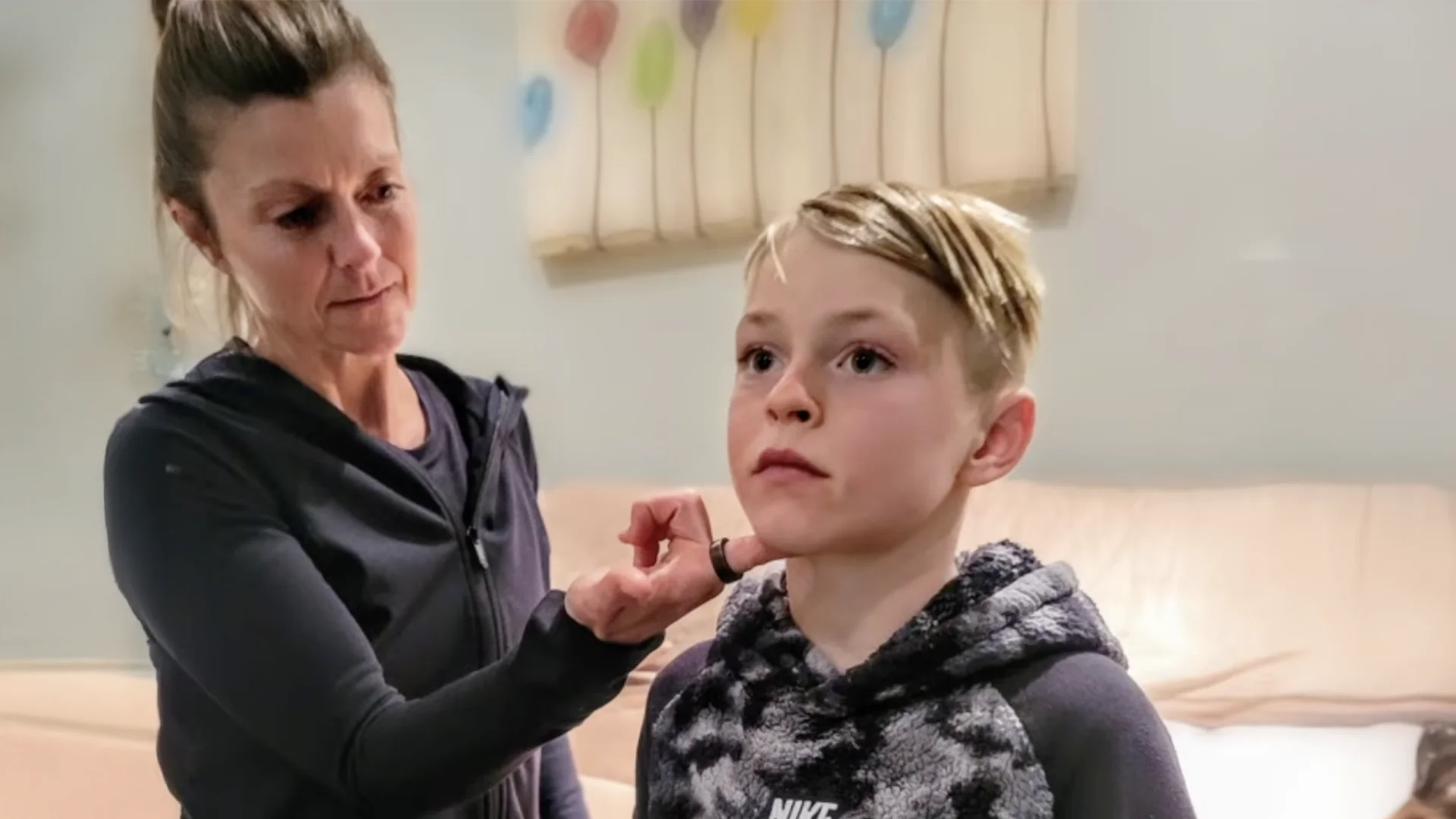
Have them practice proper nasal breathing, resting oral posture, and upper body posture. Use some of the breathing exercises above. Check out my Good Oral Posture exercises (GOPex) blog.
A Good Read by a Great Dude
I highly recommend James Nestor’s book Breath. It is a seriously great read and will keep you engaged as he explores everything about breathing and its effect on all things health. In preparation for this book, Nestor and Anders Olsson participated in a 20 day Stanford study to explore the effects of nasal breathing vs mouth breathing. The experiment called for 10 days of exclusive mouth breathing, during which the nose was completely blocked with physical barriers, followed by 10 days of exclusive nasal breathing. While sensible with an understanding of the physiology of breathing, the results were alarming. The experiment reaffirmed that human physiology is designed for nasal breathing and that mouth breathing induces chronic stress and health issues.
- 10 days of exclusive Mouth-Breathing: Caused immediate health detriments including snoring, sleep apnea, high blood pressure, high stress hormones, and decreased heart rate variability.
- 10 days of exclusive Nasal Breathing: Reversed the negative effects, with improved sleep quality, reduction of stress hormones, and restored cardiovascular health (HRV).
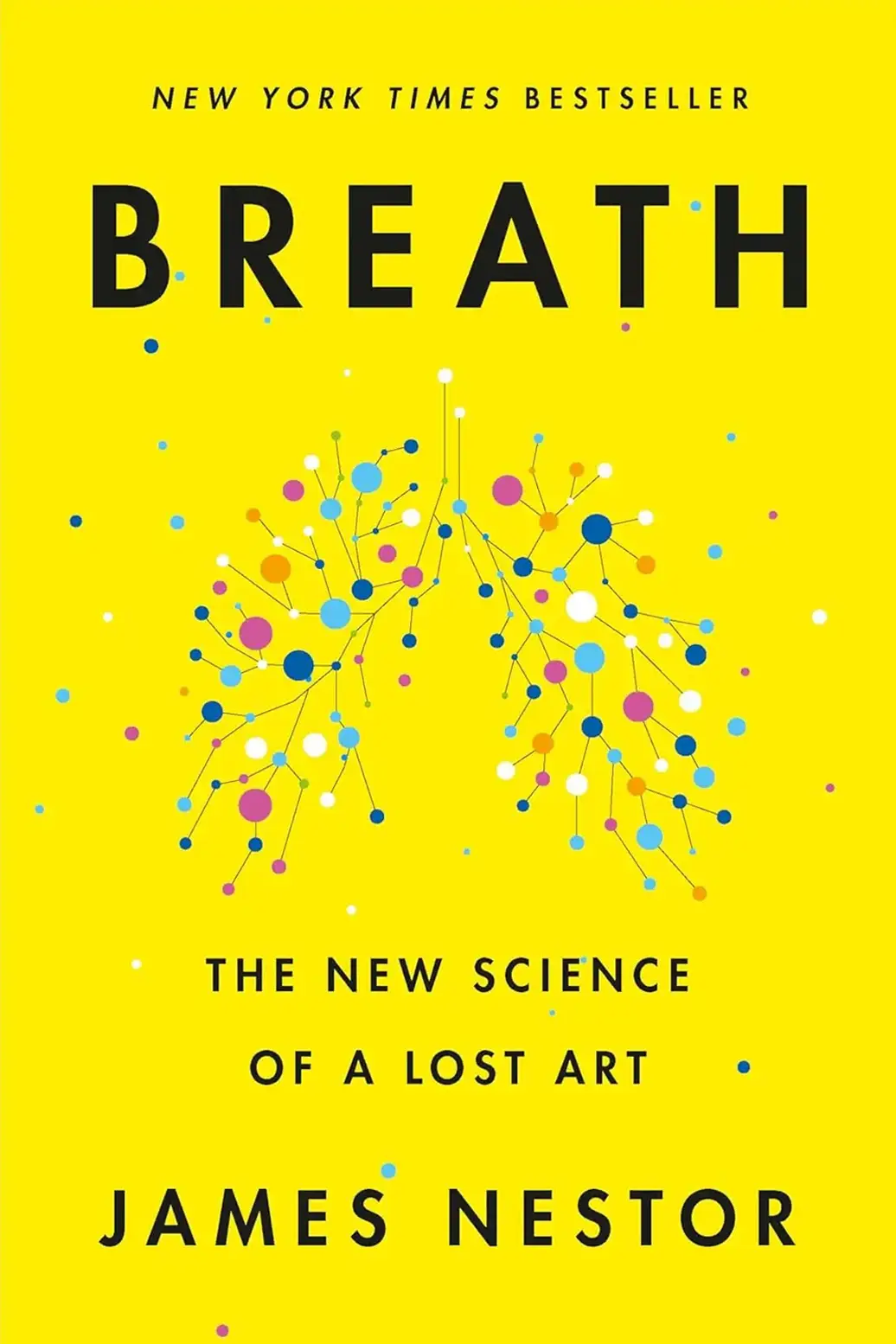
Now is my time to share one of my top celebrity encounters. I had the good fortune of meeting Mr. Nestor when he was the keynote speaker at an Airway conference I attended in 2022. I am pleased to share that he is just as great of a guy in person as he is on paper. We shared stories about my mentor Dr. Ted Belfor, who trained me years ago in the Homeoblock and who completed Mr. Nestor’s Homeoblock expansion discussed in the book. We laughed. We cried. No, we didn’t cry. We just laughed.

Another Great in the World of Healthy Breathing
Patrick McKeown is an international phenomenon in the world of nasal breathing. He is the face of the Buteyko Breathing technique. He trains practitioners and people all over the world in simple and effective techniques to transition from mouth to nasal breathing. He’s written multiple books that I encourage you to find and read. He and his team have developed and shared some fantastic free resources with the Oxygen Advantage App and the Oxygen Advantage YouTube channel, as well as the Buteyko Clinic International App and YouTube channel.
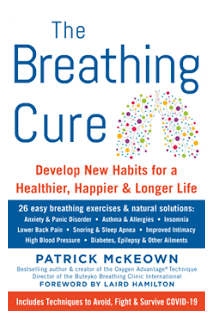
This is another celebrity encounter that I must share. Although jetlagged from a red eye flight from his home in Ireland, my Oral Myofunctional Therapist Amy and I were ecstatic at the chance at an in person meeting with him at a Collaboration Cures in Medicine and Dentistry conference.

Retraining your breathing patterns to a healthy mode and method is one of THE most important things you can do for your overall health. I hope that you find these resources helpful in living your best life!
✌️
~Dr. Mindy