

How Do Kids Build a Robust Airway
and Balanced Face?
By Dr. Mindy Richtsmeier, DDS
November 5, 2026
I’m asked this question all of the time, and I’m so committed to this that my daughter Emma and I created an Airway Remix of a hot jam from my childhood in the early ’90s. It’s been in the works on and off for about 8 years. Emma and I wrote the lyrics when she was 7, filmed some video when she was 11, and finally recorded the audio now that she’s 15.
I’m pumped to release my first and last ever music video with my best girl. Featuring my kids, our enthusiasm, and some of the many mouths/airways/TMJs that I’ve had the privilege of transforming through the years. Filled with airway health, nasal breathing, oral balance, and a couple of creators passionate about the cause.
Vanilla Ice may have had a better recording studio and film crew even back in 1989, but Emma and I win at enthusiasm 😜.
Please enjoy the Emma and Mindy Richtsmeier Airway Remix of the one and only Ice Ice Baby…

The way our jaws grow not only determines how the teeth will fit, but so much more. Jaw growth determines the size and patency of the airway behind the jaws, as well as the nasal cavity above the jaws. Jaw growth determines the appearance of the lower two thirds of the face: the jawline, the under eye support, the lip support, the shape of the nose, the prominence of the cheekbones. Jaw growth determines the health of the TMJ through life. Proper forward growth of the jaws allows for healthy and neutral jaw joints, while improper jaw growth can result in compression of the jaw joints which can include clicking, muscle dysfunction, tooth destruction, and/or pain.
The more I can help parents understand the recipe for proper development of the jaws and airway, the more power you all will have to optimize this development. Our modern world has us up against a lot (please dig into my Return to Factory Settings blog and all related resources), but let’s dive into the nuts and bolts of proper growth.
The more you understand fascial networks and their function, the more you will understand why poor posture and kinetic (movement) dysfunction anywhere in the body can affect the development of our jaws and airways.
Oral Soft Tissue Balance Is at the Core of Airway and Facial Development
Balance at Rest
- Tongue resting fully in the palate, inside the teeth.
- Mouth closed, with the teeth either lightly touching or very slightly apart.
- Lips sealed.
- Nasal breathing.
Balance in Function
- A proper swallow.
- Proper chewing mechanics.
A Proper Swallow Looks Like This
- No movement of facial muscles.
- The tongue fully creates the seal with the palate.
- The tip of the tongue pushes up on “the spot” (the incisive papilla behind the front teeth).
- This is followed by a wavelike motion with the middle and back of the tongue pressing up to the hard palate.
- Following each swallow, we must immediately return to nasal breathing.
- These mechanics are critical for each of our 500-ish swallows per day: when we’re eating, when we’re drinking, when we’re just swallowing our own spit throughout the day.
Proper Chewing Mechanics Look Like This
- Lips closed the entire time.
- Nasal breathing the entire time.
- Pause and complete a proper swallow.
Form Follows Function
- Chew more. Our hunter-gatherer ancestors ate raw, uncooked foods that required a lot of chewing. This is what humans were built for. Processed, soft, cooked foods don’t require enough chewing to grow to our full genetic potential.
- Eat foods that require a lot of chewing: raw veggies, beef jerky, etc.
- Chew each bite of whatever you’re eating at least 25 times.
- Avoid pureed mush with infants. Use the Baby Led Weaning method and go straight to solid foods.
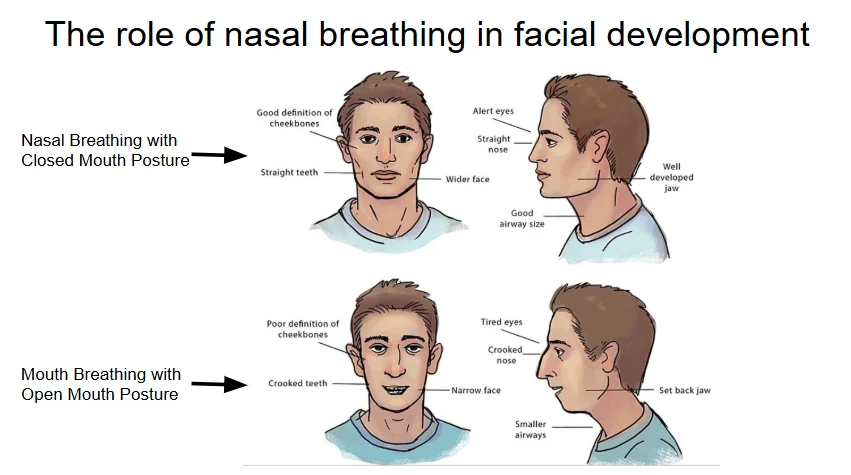
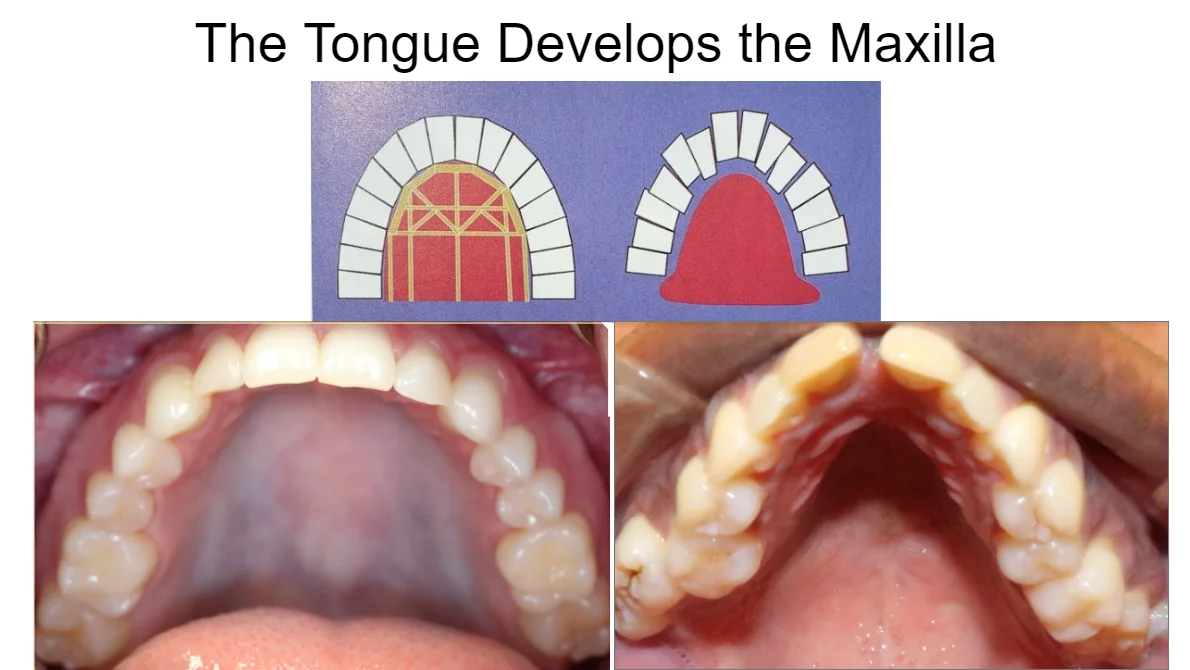
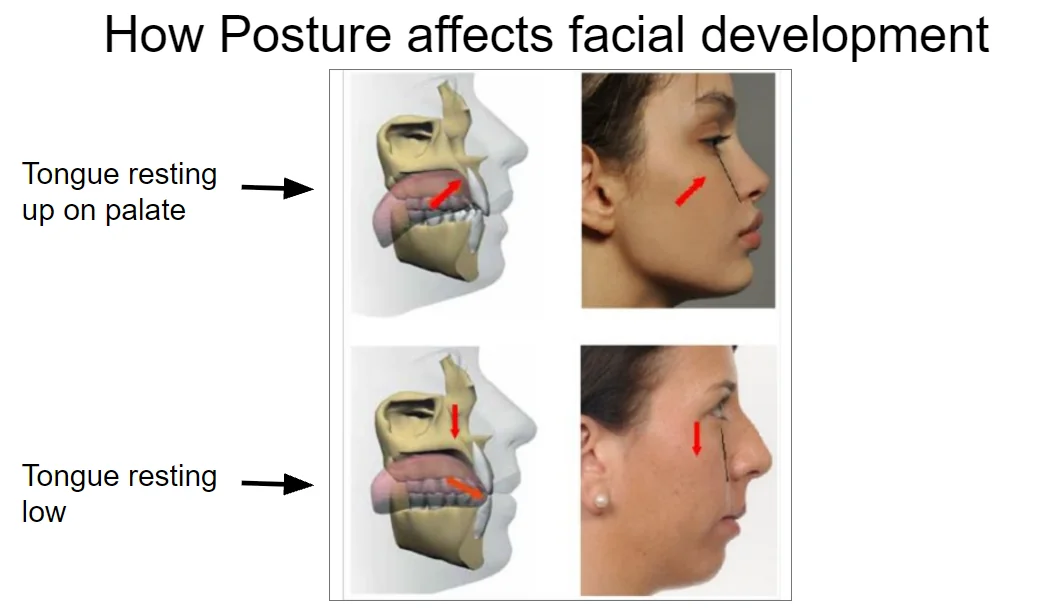
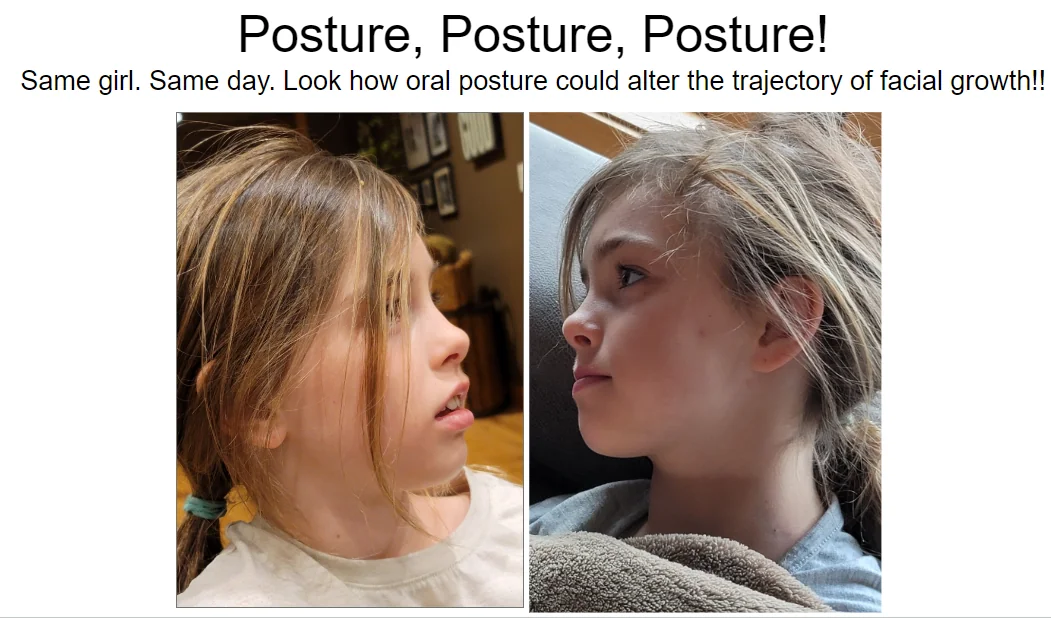
Have a look at the dramatic difference that nasal breathing and proper oral posture make in development of the face surrounding the jaws (and thus the oropharyngeal airway behind the jaws, the nasal airway above the jaws, and the TMJs operating the jaws).
Understand the Underlying Conditions
Understand the underlying conditions that may be behind a child who cannot chew with their mouth closed or keep a Myomunchee in their mouth for long or keep their mouth closed even though you are reminding them… all because they feel like they can’t breathe. The contents of the airway may be severely inflamed and blocking airflow.
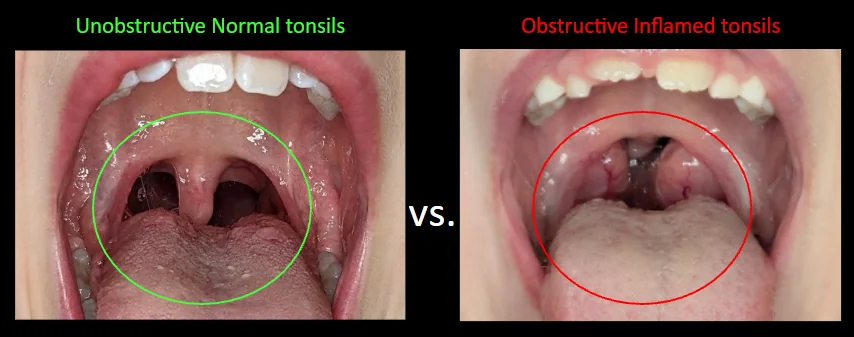
This could be the tonsils in the oropharyngeal airway. You can visualize these if you have your child open wide and say “ahhh”.
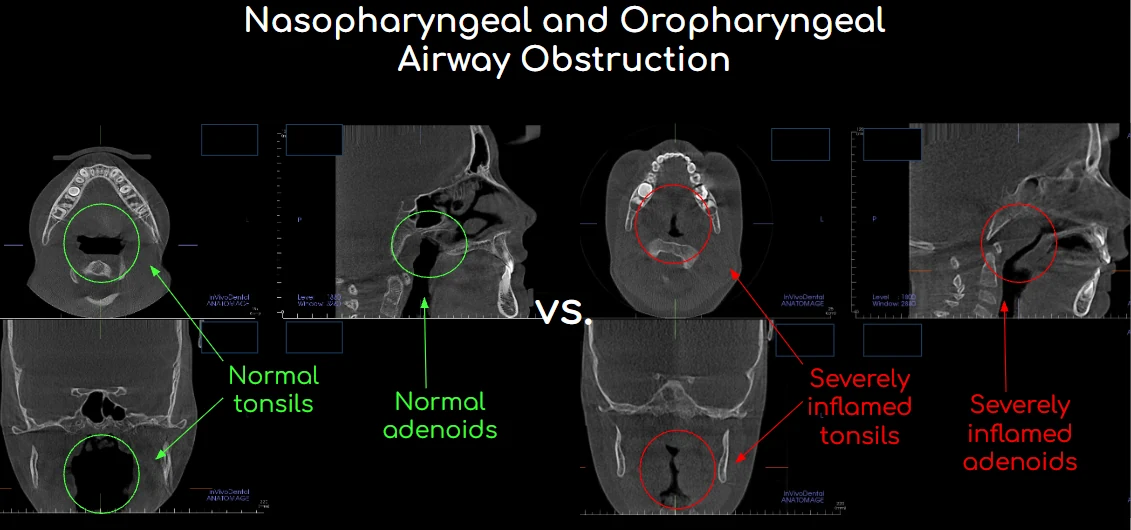
This could be the adenoids in the nasopharyngeal airway. You can’t visualize these because they live above the soft palate. These are cone beam CT images that I have taken in my office that demonstrate the difference between normal adenoids and tonsils vs. severely inflamed and obstructive adenoids and tonsils.
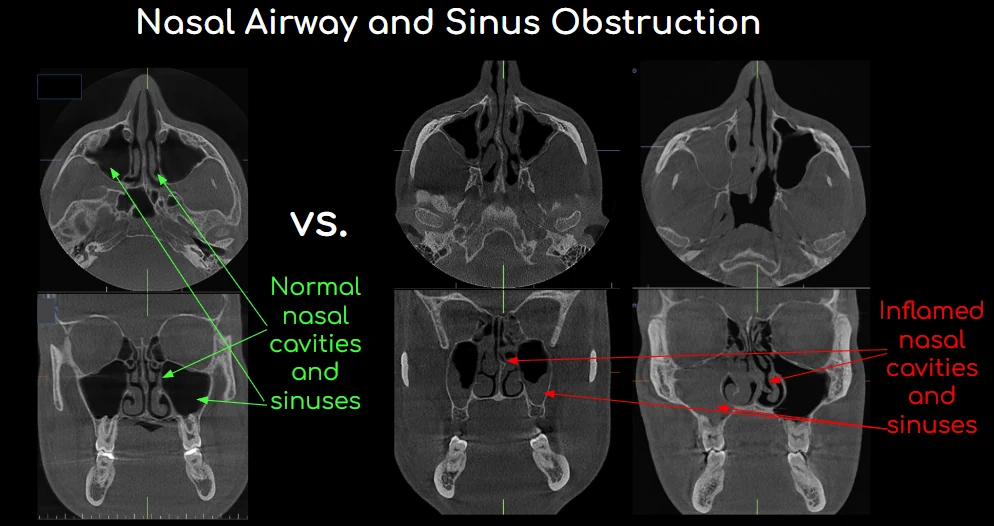
This could be swollen turbinates in the nasal airway or poorly draining sinuses. These are cone beam CT images that I have taken in my office that demonstrate the difference between normal turbinates and sinuses vs. inflamed tissues.
Avoiding Adverse Forces
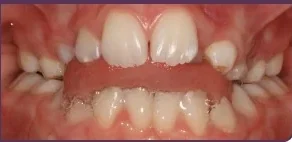
Avoiding adverse forces early in growth is very very important. Some of the most common include prolonged use of a pacifier and prolonged thumb sucking. Pacifiers and thumbs should be removed by 6 months old. Beyond this, non-nutritive sucking on anything that gets between the tongue and the palate can bring the following changes to the jaw bones:
- The premaxilla (anterior maxilla) can be impacted which will result in a reverse smile line (anterior open bite).
- The hard palate can form a high vault rather than the broad flat shape that it needs to support proper tongue posture and function.
- The alveolar bone that holds the teeth can collapse inward resulting in narrow V shaped arches rather than the broad U shaped arches that will accommodate all of the teeth with the tongue inside them.
- The mandible can be pushed back (recessed) and be prevented from proper forward growth.
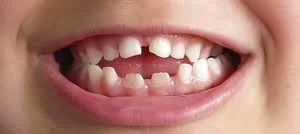
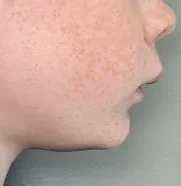
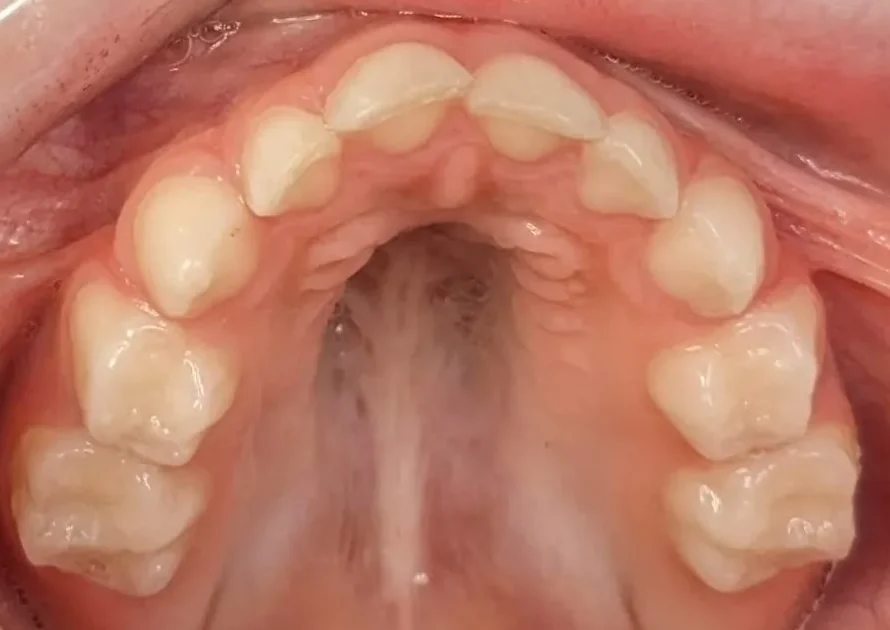
A word on this… I had a discussion with a brilliant local osteopathic physician with whom I frequently work integratively for patients of all ages. Dr. Kate Heineman had a mind-blowing osteopathic perspective for me on prolonged non-nutritive sucking of pacifiers or thumbs… it is an alternative way for the infant or toddler to achieve maxillary flexion/extension if the tongue is not providing it. Let me break this down. The tongue properly resting in the palate with a proper swallow pushing up against the palate gives maxillary support with flexion and extension for balanced and subtle rhythmic cranial micro-movements. In short, if the tongue is not doing its job with palatal support, a young child may employ the pacifier or thumb to help get the stimulation and cranial respiration the body is looking for.
Warning Signs That the Tongue Is Not Doing Its Job
A few other warning signs that the tongue is not doing its job:
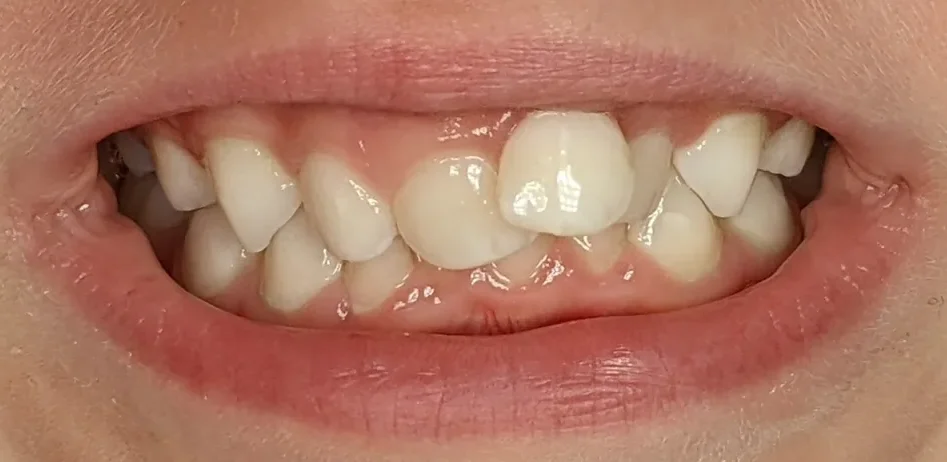
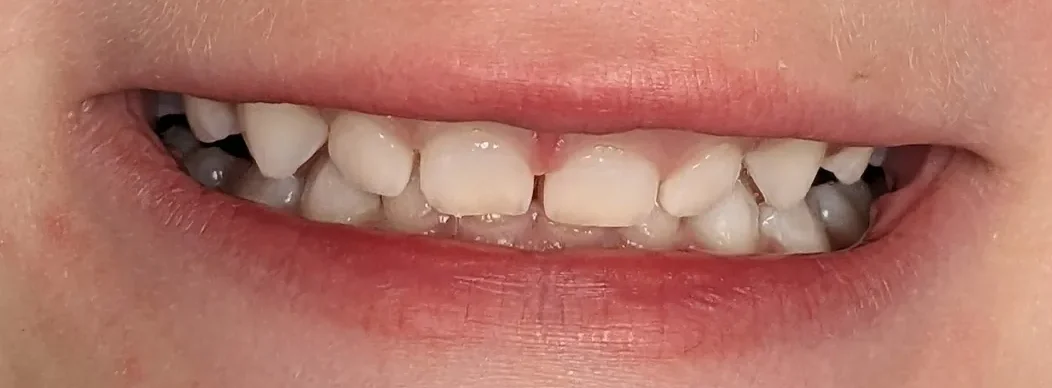
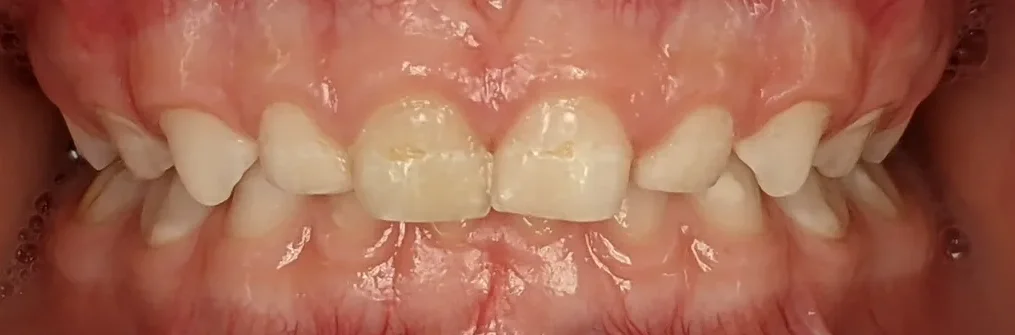
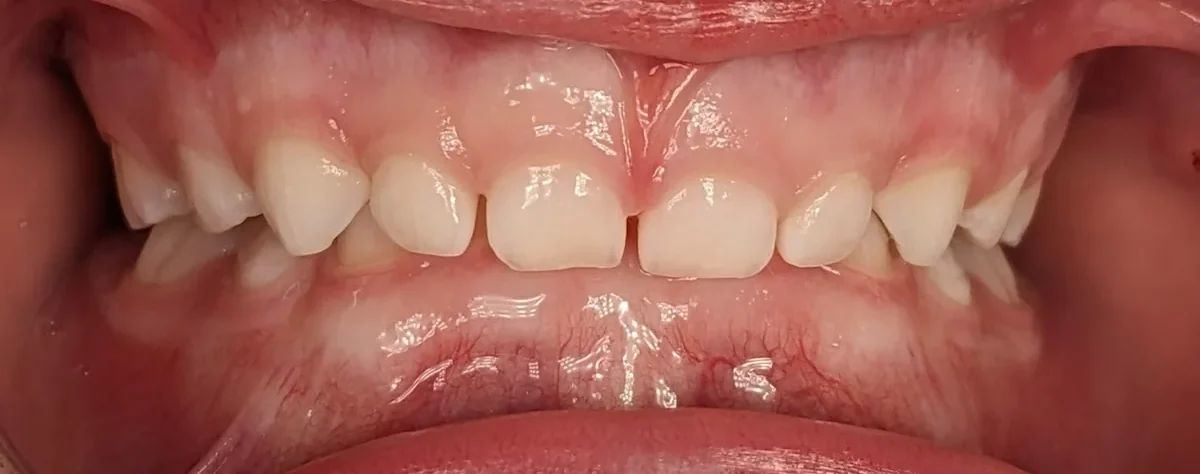
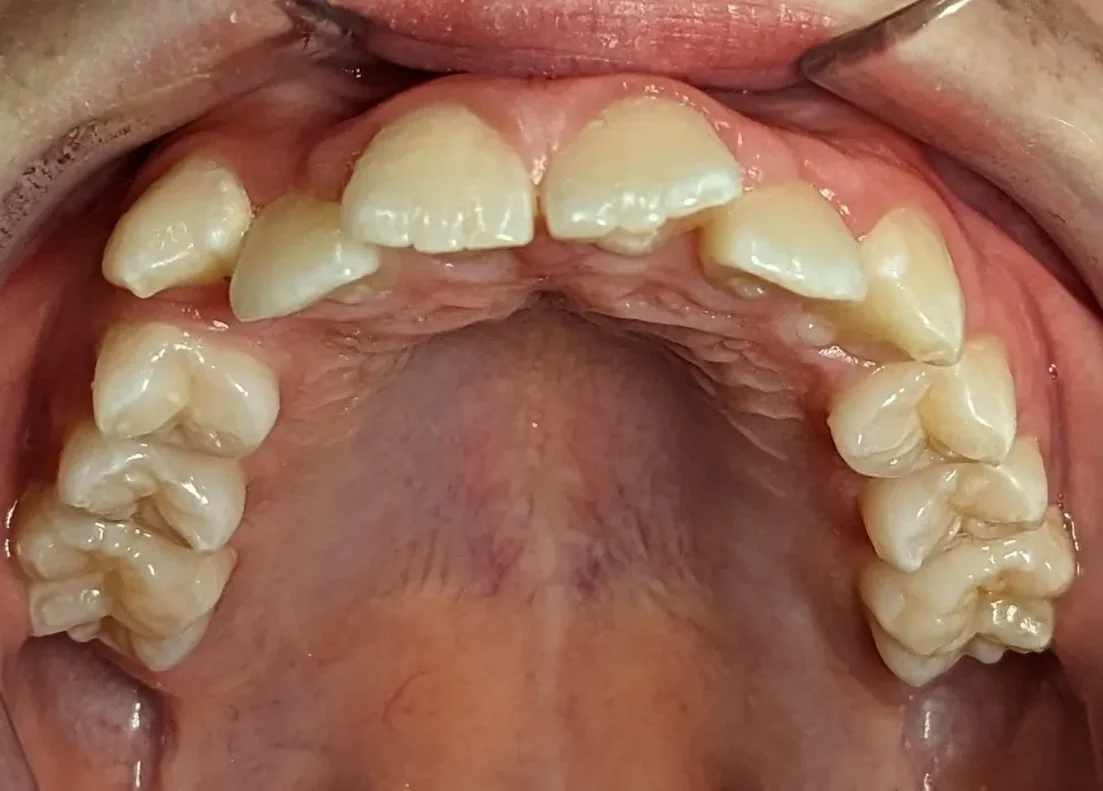
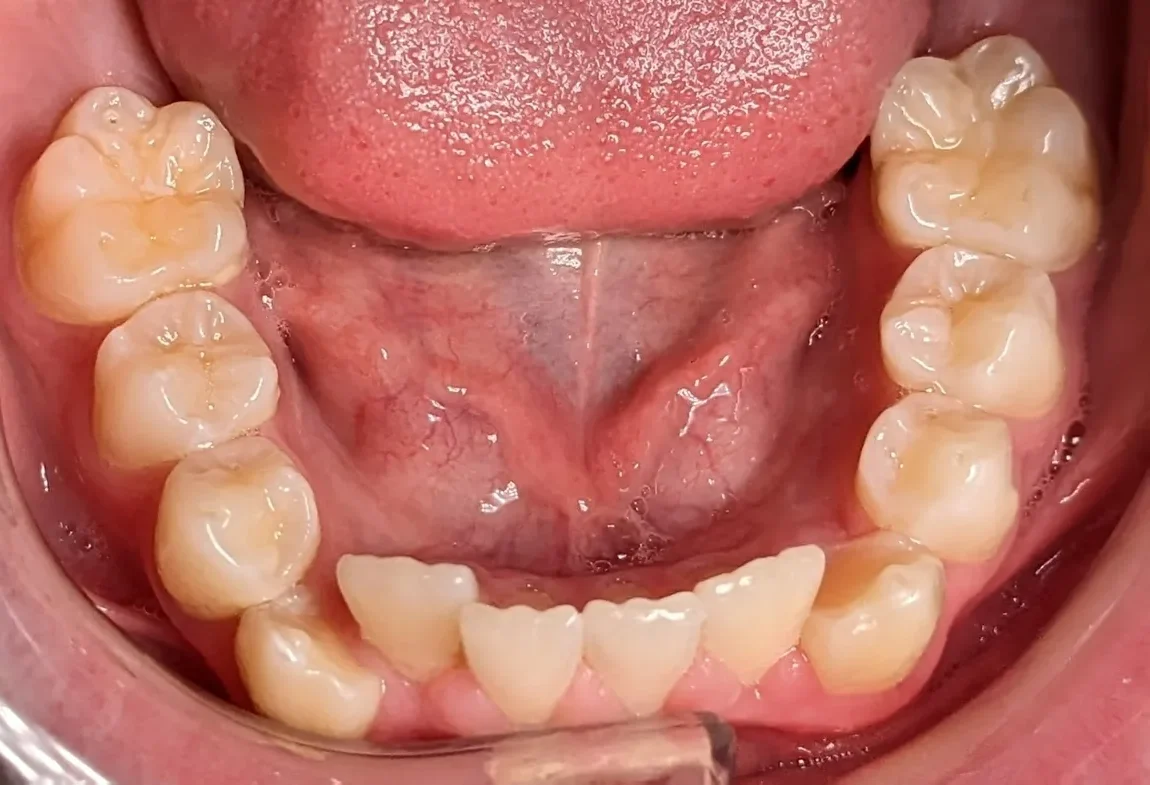
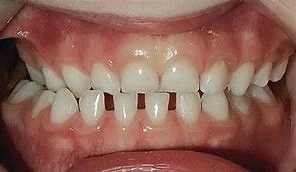
- Crowding of the baby teeth. There should always be spacing between all of the baby teeth, as the permanent teeth coming to replace them are much larger. This is called primate spacing. If the baby teeth are touching or, worse yet, if they are crowded, that is a prime indicator that the bony foundation for the teeth is not growing large enough to accommodate them.
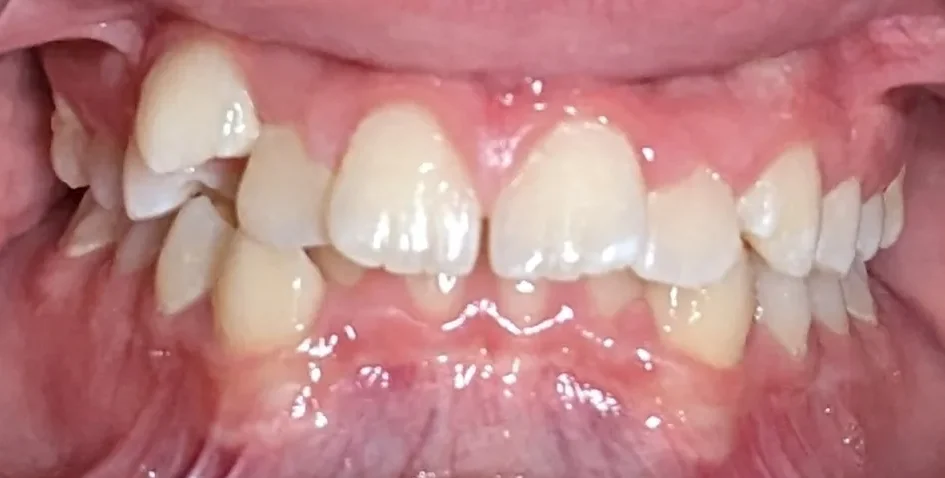
- Permanent teeth crowded out of the arch. The problem is NEVER that there are too many teeth. The problem is that the foundation did not grow large enough to fit all of the teeth, nor did the jaws grow big enough to allow the tongue to live properly inside them.
- Overbite, when the top front teeth completely overlap and hide the bottom front teeth. This occurs when the tongue is not supporting the palate for forward and outward growth of the maxilla. The collapsed front segment of the maxilla traps the mandible as it tries to grow forward, and the overbite is exacerbated as the lower teeth get pushed up and back out of the occlusal plane.
- Crossbite. All of the top teeth should be outside or in front of the bottom teeth. When the maxilla doesn’t grow large enough with proper tongue support, then a crossbite will result where the top teeth sit inside the bottom teeth in one or more sections of the arch, or across the whole arch. Often there is a functional component where the mandible has to shift to one side or forward in order to get the teeth to bite together.
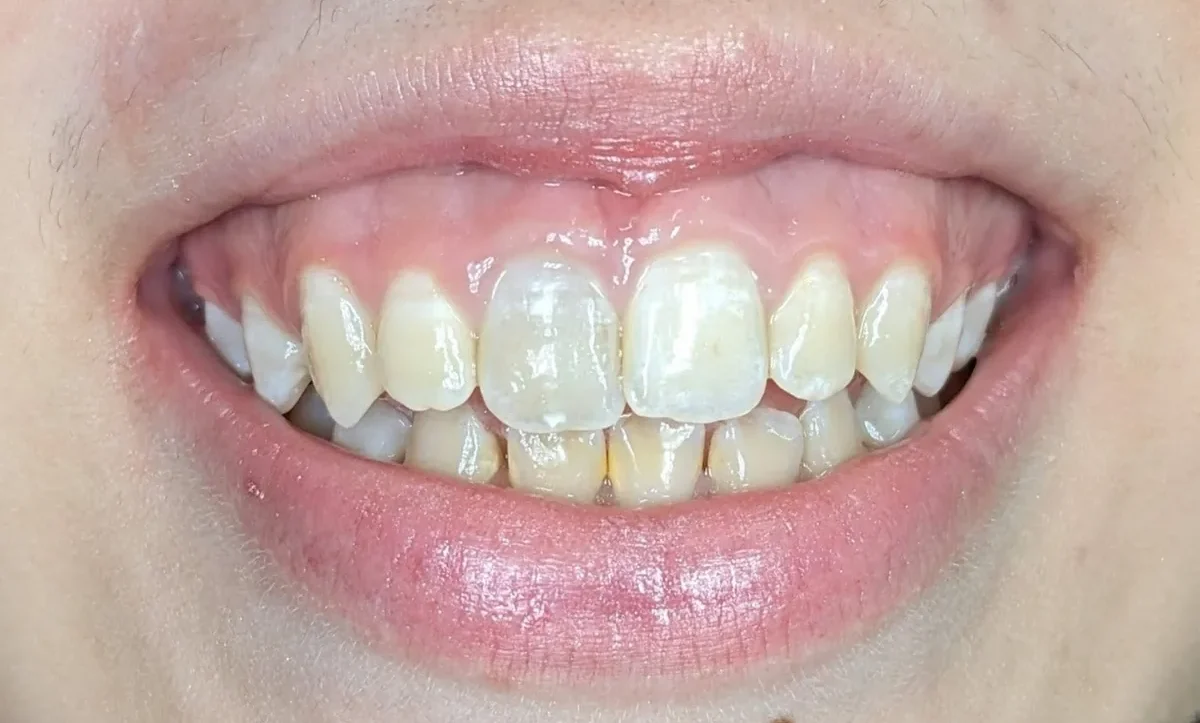
- Excess gingival display or a “gummy smile”. The lip is not too short. The maxilla has experienced too much vertical growth without the tongue properly resting and functioning to support it. In these cases, the resultant growth is downward rather than outward.
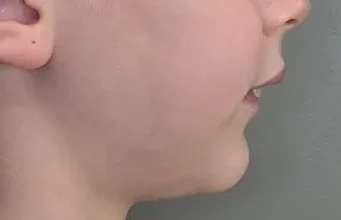
- Recessed “set back” mandible. A convex profile with the mandible set back is a strong indicator that the mandible is trapped and not growing forward appropriately. Sometimes it is stuck behind collapsed top teeth. Sometimes it is not blocked by the teeth, but rather blocked by an overactive mentalis muscle in the chin that sucks in and back to create a seal for each swallow to compensate for a tongue that is not doing its job on the palate.

Action Items
- Teach your kids to be mindful of their oral posture and function.
- Give reminders.
- Lightly push up the soft area under the chin in order to push the tongue up into the palate.
- Chew more! Chew each bite at least 25 times, even if it is cooked and doesn’t require that much chewing.
- Eat raw veggies, jerky, things that require a lot of chewing.
- Find an Oral Myofunctional Therapist in your area to get professional help. Amy Goecke is ours at Apex Dental and she is amazing if you are near the Des Moines metro.
- Implement the Good Oral Posture exercises in my GOPex blog.
- Get and utilize a Myomunchee and a REMplenish straw to improve oral tone and function.
- Utilize all of the Buteyko Breathing free resources available from Patrick McKeown to transition to nasal breathing 100% of the time. These include his Oxygen Advantage and his Buteyko Breathing International apps and YouTube channels.
- Find podcasts and interviews with Patrick McKeown and James Nestor to learn more about methods to encourage proper nasal breathing.
- Review my Nasal Breathing blog for more information and ideas, including dilators and natural methods to open a blocked nose.
- Review my blog on natural treatment of colds and congestion for some natural options during times of sickness.
- Consider mouth taping as a gentle prevention of falling open subconsciously when focused on a book, computer, or the tv, as well as at night. Make sure the nose is working and use Patrick McKeown’s method described in this interview to do it appropriately. You can use his Myotape that goes around the mouth. My kids both prefer Vio2 tape. All can be found on our Recommended Products page.
- This is another great Patrick McKeown interview section on getting kids to nasal breathe.
- To avoid or to treat any suspected tonsil, adenoid, nasal, or sinus inflammation… make every effort possible to reduce systemic inflammation which is always at the root. Refer to all sections of the Return to Factory Settings blog for a comprehensive approach.
- Try natural treatments of the inflamed airways with the natural nasal sprays and irrigation, as well as the throat sprays on our Recommended Products page. Also implement Vitamin D for immune support and Vitamin C as an antioxidant.
- Consult with a functional medicine doctor for professional and customized advice in determining and treating the root cause of the inflammation.
- Consider seeing an ENT if the above factors are not working. Airway obstructions must be eliminated for a child to be able to nasal breathe properly for oral posture and function, as well as for overall health and nervous system regulation.
REMEMBER That the Body Is a Connected Unit
Remember that the body is a connected unit, so fascial dysfunction throughout the body can have ill effects on oral posture and function…
The modern dysfunction of three particular fascial chains plays a large role in the imbalance in oral posture and function, in the jaw joints (TMJs), and in the airway and breathing.
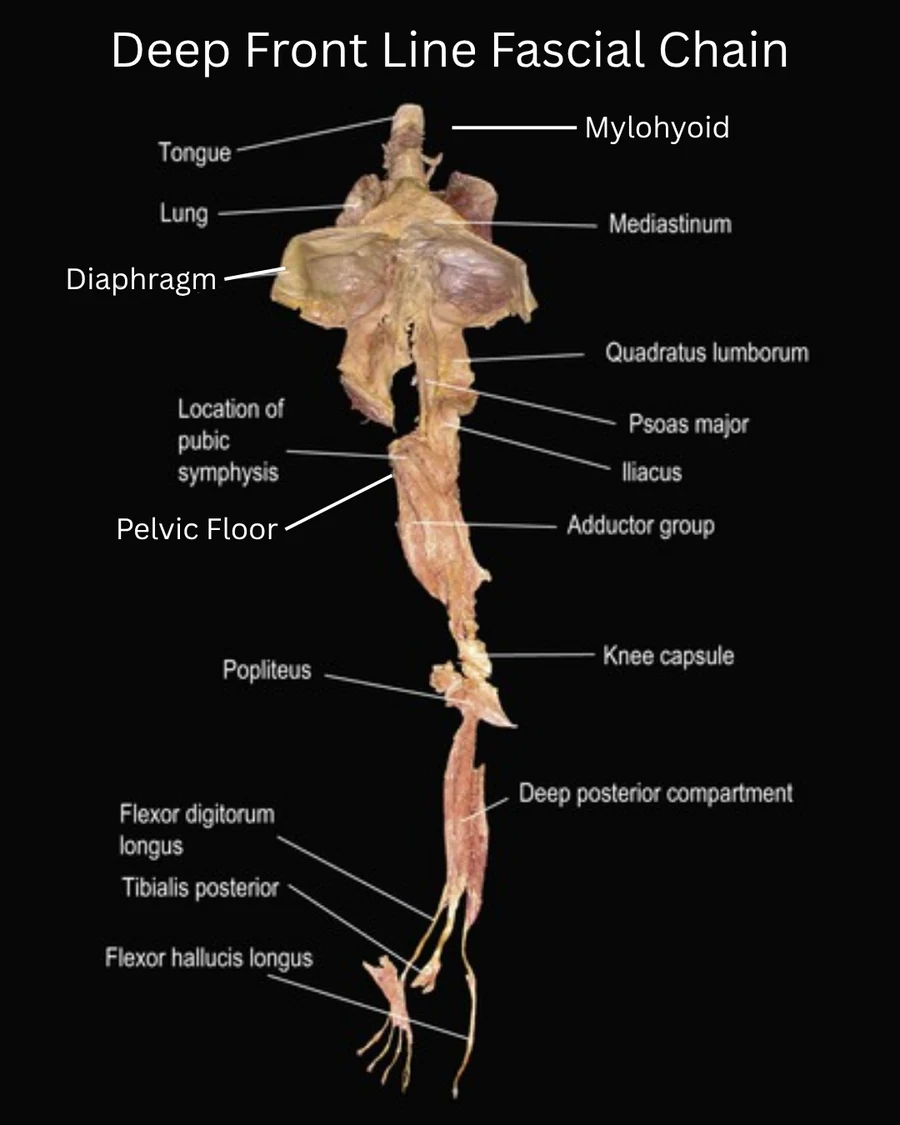
The Deep Front Line (DFL) is intended to be our core support. It runs from the tongue to the toes. It connects our 3 critical diaphragms (the respiratory diaphragm, the oral diaphragm <mylohyoid>, and the pelvic diaphragm <pelvic floor>). Dysfunction of this fascial line can be caused by and will contribute to breathing dysfunction, oral dysfunction, and TMJ dysfunction.
Modern life and its excess of sitting in chairs, its tendency to work on screens and at desks in front of us, its more sedentary nature, and its propensity toward mouth breathing all bring dysfunction of the DFL.
Before you say “that’s not me” or “that’s not my child”, think of how you sit when you’re in a car, when you eat dinner, when you are on the couch, when you are at a desk, when your child is in school, etc.
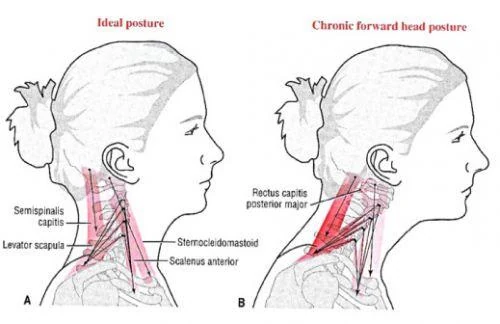
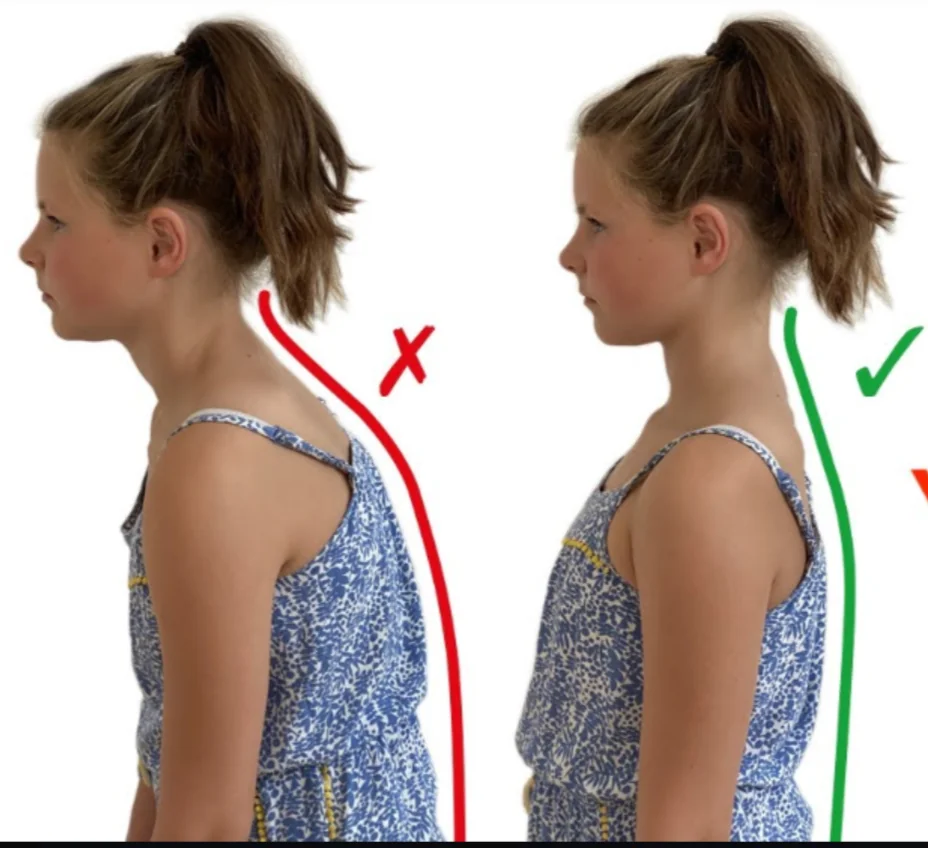
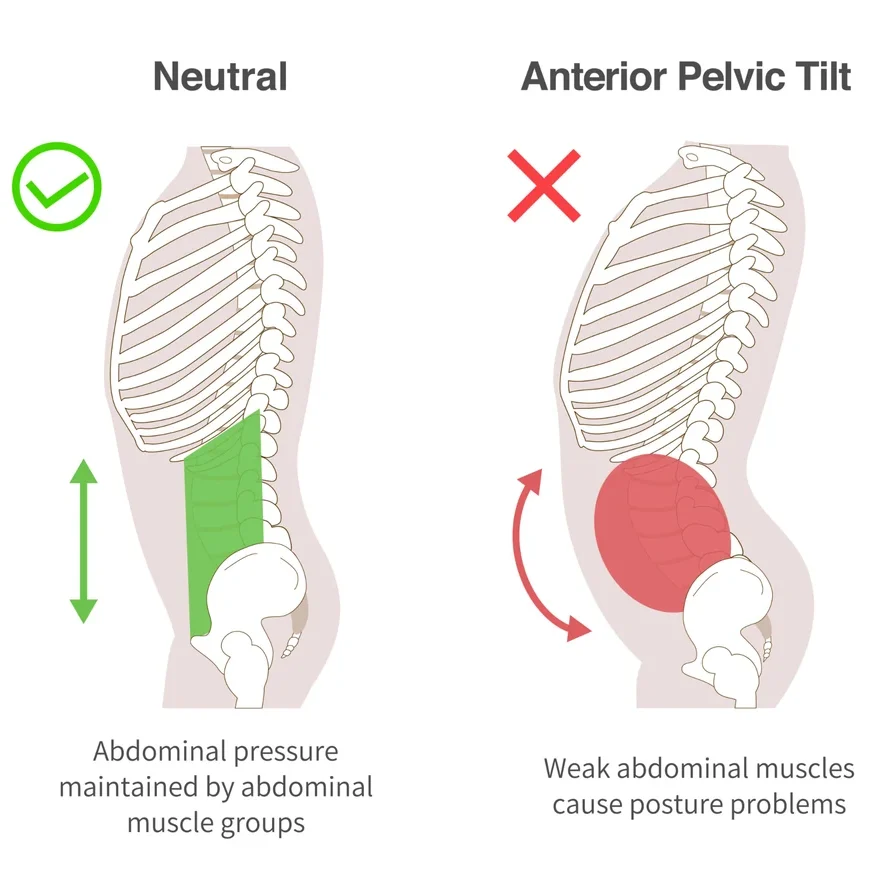
This is what often happens when we sit too much with our legs at a 90 degree angle, especially when we are focused on work in front of us at a desk and/or on a computer.
- The head postures forward.
- The shoulders slump forward into a C-shaped upper body posture.
- The rib cage and the diaphragm no longer can fully move for proper breathing mechanics.
- The pelvis tilts forward, away from its neutral position.
- The Deep Front Line, which is meant to be the body’s core stabilization, collapses.
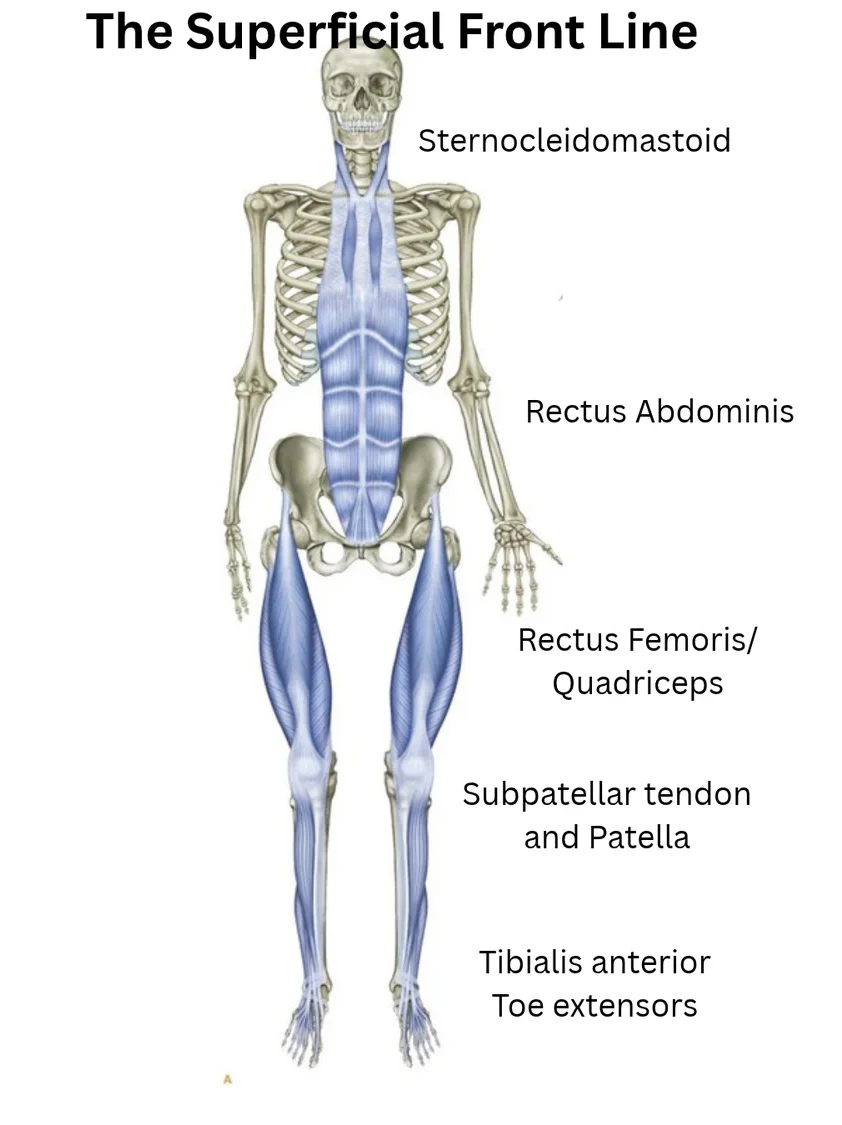
- The Superficial Front Line adaptively shortens and tightens at and below the hips, and loses strength in the abdominal portion due to the slumped shoulders.
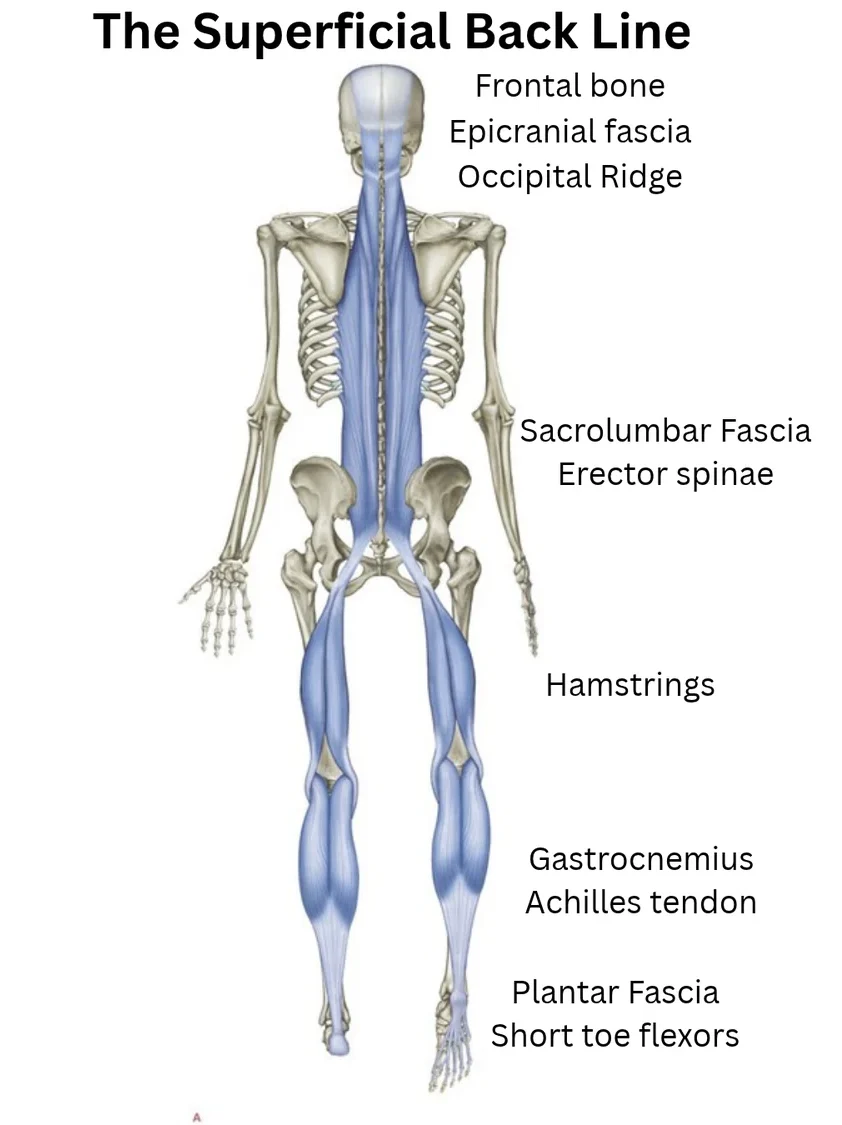
- The Superficial Back Line over-lengthens to its limit at the neck and shoulders as the upper body slumps forward, and is forcefully contracted in the lower back to support the abdominal region.
- Other areas of the body that may show symptoms of dysfunction of these fascial lines: prolonged bedwetting and/or urinary urgency with pelvic floor dysfunction, upper neck and shoulder pain with the overextended upper SBL, knee pain from internal rotation of the femur from collapsed deep hip flexors of the DFL, foot and ankle instability that can show up in a number of ways including plantar fasciitis, Sever’s disease, and bunions.
Action Items
- Avoid 90 degree chair sitting when you can.
- Sit cross-legged on the floor or on the chair or on the couch. “Sit” in a deep squat on the floor like our hunter-gatherer ancestors. Both of these positions keep the pelvis in a more neutral position to engage the DFL.
- Break up sitting 90 degrees in a chair with movement. Get up and walk around as much as you can. Jumping jacks, air squats, military calisthenics by your desk.
- When standing in line, balance on one leg to engage the DFL.
- Walk on uneven surfaces.
- Walk barefoot whenever you can.
- Start every morning with a big full body head to toe stretch before you get out of bed.
- Incorporate a quick full body fascial stretch throughout the day, particularly after you’ve been immobile for a prolonged period. Watch your dog stretch every time they get up after lying down. Do what they do 😉
- Find a Postural Restoration Institute trained physical therapist to work with.
- Find a physical therapist or massage therapist with expertise in myofascial release.
- Take the 10 week online Functional Patterns course.
This Starts in Infancy
This starts in infancy. The body needs balance from the start. Moving from an enclosed scrunched up area in the womb to the great outdoors at birth is a big change that can use a little help to adapt for proper posture and development of movement, no matter what the birthing method. Work with an osteopath, physical therapist, chiropractor, or craniosacral therapist who is proficient in working with infants in craniosacral fascial therapy post birth.
A couple of places to look for more information:
- The Gillespie Approach to Craniosacral Fascial Therapy. Charity Spears out of Arizona is currently (as I write this in 2026) putting out some very informative content on IG and FB.
- I have recently discovered a brilliant osteopath out of Malaysia who shares a great deal of concepts and content online with regards to infants. His name is Nicolas Grimaldi and you can find him and links to many of his resources on IG.
More Action Items
- Breastfeed if at all possible, as this provides the proper tongue to palate mechanics to grow the jaws and airway.
- With any bottles or pacifiers, avoid the design with a long skinny tip that gets in the way of the tongue to the palate. Go for the broad and shorter designs that mimic the breast, like the Ninni pacifier or the Evenflo wide slow flow nipples.
- Make sure pacifier use or thumb sucking ceases by 6 months of age.
- Remember that continued pacifier or thumb sucking is often a sign that the tongue is not delivering the support and stimulation needed by the palate. Find an infant specialized craniosacral therapist for help to achieve balance.
- No pureed food for babies! Baby Led Weaning method straight to solid foods in order to stimulate proper growth and development.
NUTRITION!! This Is Huge.
Our growing children need nutrient dense diets to optimize growth and development.
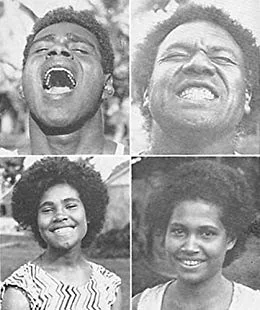
Weston A. Price did a phenomenal job of documenting this with photographs in the 1930s, as he travelled the world to research the effects of the shift of traditional populations from their traditional hunter-gatherer diets to a more processed industrialized diet. This time in the world was a great time to research it, as it was the beginning of trade with the industrialized world so he could easily see the generational shift in dental health and oral development between generations not exposed to nutrient-poor industrial food and those who had this food as a larger part of their diet than their traditional diets.
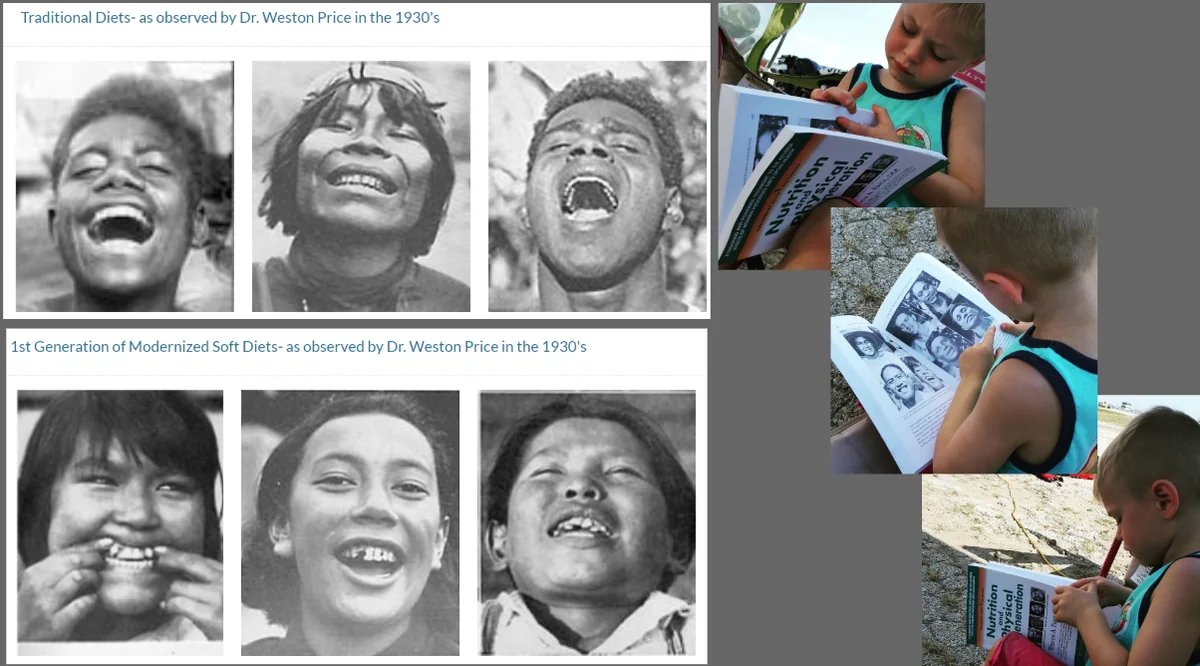
His findings were consistent, no matter the location or the particulars of their ancestral diets. Those who were raised on and were still eating their traditional diets had no dental decay and had perfectly developed jaws that housed all 32 of their teeth in good alignment. Those who were in the nearby areas that had begun trade with industrialized nations and shifted to modern soft and nutrient-depleted diets had high rates of dental decay and underdeveloped jaws with various degrees of crowding of their teeth.
Traditional Diets



First Generation Industrialized Diets
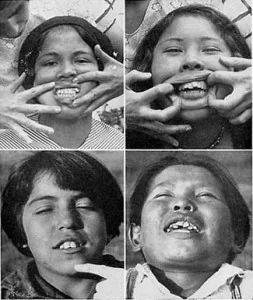
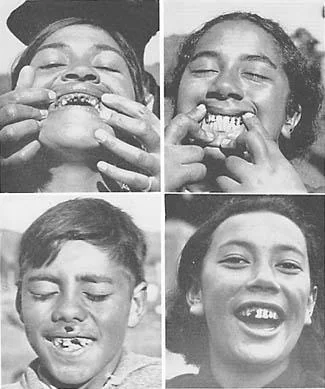

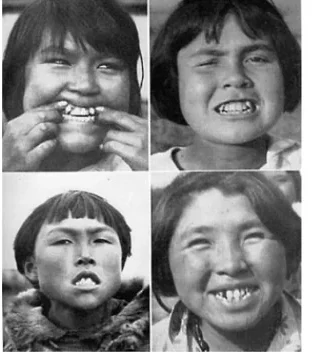
From the traditional diets of fish and oats in Scotland, to raw dairy and sourdough in Switzerland, to fish and land animal meat in Alaska, to grains and meat and raw dairy in Africa, to land animals and river fish and grains in the Peruvian Andes… The findings were the same. Nutrient dense natural diets packed with minerals and fat soluble vitamins brought perfect dental health and development. The shift to a nutrient-depleted industrialized diet with refined sugars and stripped white flour and pasteurized milk and processed seed oils brought decay and poor development.
The reasons are many. The body needs nutrients to grow properly. The body also needs nutrients to stay in good health and prevent inflammation that causes mouth breathing and poor oral posture and development.
Refer to my Nutrient Dense Anti-Inflammatory Diet blog for more insight.
Now, Let’s Help Our Kids Grow to Maximize Their Airways and Their Health!
Here are some examples of me helping mine…
Tongue up!
Nasal breathing at night
Posture checks
Tongue to palate reminders
Breakfast that builds
I hope you found this helpful!
✌️
~Dr. Mindy