
Teeth Whitening
In-office and take-home whitening, planned around your teeth and gums.
A Whiter, Brighter Smile
Professional whitening brightens your natural teeth by reaching through the enamel to the dentin underneath, which sets the shade of your teeth. We offer two ways to do it: in our office, or at home with custom trays. Either way, we check your teeth and gums first so you know what to expect.
Typical results are 1 to 3 shades lighter, though every smile is different.
Two Ways to Whiten
Take-home trays are the most popular with our patients and reach an equally great result over 1 to 2 weeks. In-office whitening gets you there faster.
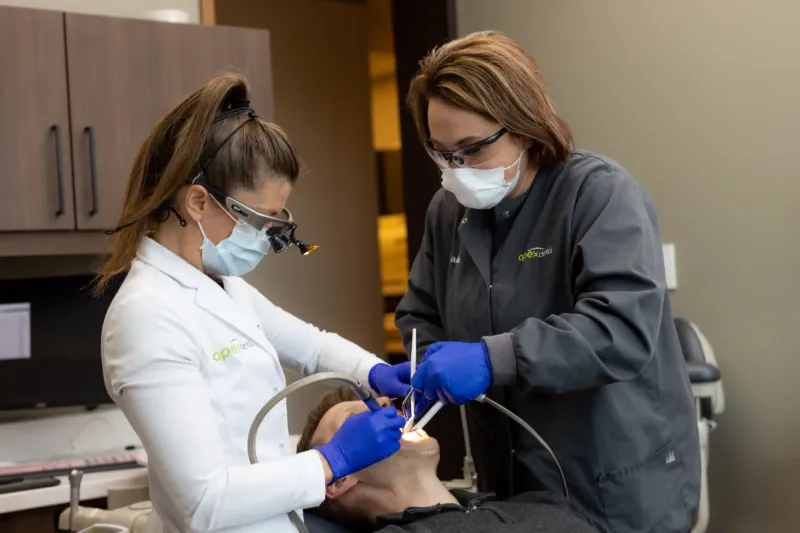
In-Office Whitening
- Usually one visit of about 1.5 hours
- A stronger peroxide gel plus the GLO Science whitening light, which uses a specific wavelength to boost the gel
- Results you can see right away
- We protect your gums with a barrier before we start
- The stronger gel can mean more sensitivity if your teeth are prone to it, so we have a desensitizing gel available
Take-Home Whitening
- Custom trays made to fit your teeth
- Professional whitening gel (typically 22% carbamide peroxide)
- Wear the trays 1 to 2 hours a day
- Full results in about 1 to 2 weeks of daily use
- A gentler pace: if your teeth get sensitive, take a day off or shorten your wear time. Refill gel is available from our office.
Want both? Our in-office and take-home bundle gets you to your shade quickly in the office, then you keep it there at home with your own custom trays.
Before You Whiten
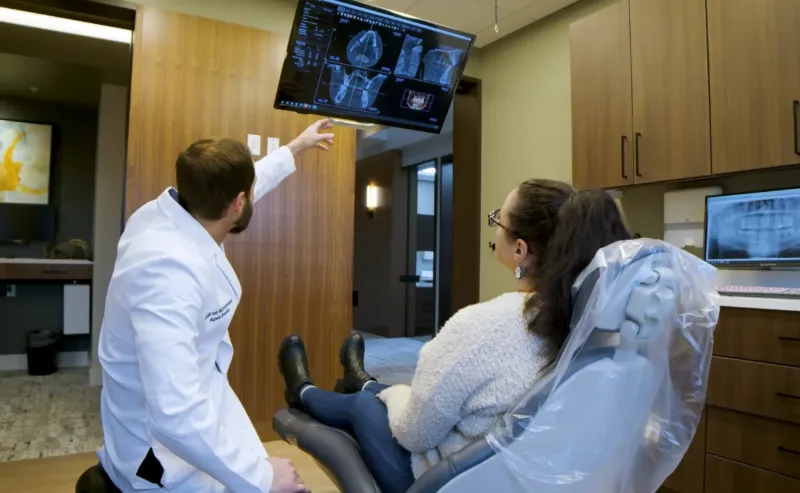
Whitening is its own appointment, separate from your cleaning. It works best after a professional cleaning, once any cavities or other treatment needs are taken care of. First, we check:
- Cavities or other treatment needs. Whitening can make those teeth sensitive, so we take care of them first.
- Your gums. We make sure your gums are healthy first, because whitening gel can irritate gums that are already inflamed.
- Fillings, crowns and veneers on your front teeth. Whitening doesn’t change their color. If you’re planning new fillings, crowns or veneers on your front teeth, whiten first. Then we match the new work to your brighter shade, and we’ll help you plan the timing.
Who should wait: we don’t recommend whitening for kids under 16, or during pregnancy because it hasn’t been properly studied.
Gum recession: recession can make whitening a poor fit for some people because of sensitivity, and whitening won’t lighten exposed roots. In the office we can cover those spots during treatment. Take-home trays can’t block them out, though take-home whitening usually causes less sensitivity overall. We’ll talk through what to expect before you start.
Will Whitening Make My Teeth Sensitive?
It can, with either option. Here’s how we keep it manageable:
- In the office: desensitizing gel is available, and we protect your gums and any exposed roots.
- At home: space out your sessions or shorten your wear time.
- If you have custom trays (take-home or our bundle): after each session, wear a remineralizing paste in your trays for 30 to 60 minutes. Options include MI Paste from our office, Dentite, or a hydroxyapatite toothpaste.
How Long Do Results Last?
Most people are happy with their in-office results for 4 to 12 months. Take-home results with custom trays often last a year or more: in one long-term study of tray whitening, about 3 in 4 patients had little color change after 1½ years, and about 6 in 10 after 3 years (Haywood et al., JADA, 1994). How long yours last depends mostly on what you eat, drink and smoke. Coffee, tea, wine, smoking and tobacco all stain teeth faster.
If you have custom trays (take-home or our bundle), we recommend a touch-up at home about every 6 months, using refill gel from our office. Brushing with a hydroxyapatite toothpaste also helps keep teeth white, because it makes the enamel less porous.
Dr. Mindy on Whitening Safely
Peroxide whitening works because it can reach through the microscopic pores in your enamel to the dentin underneath, which sets the shade of your teeth.
Higher-strength peroxide can irritate the gums. That’s why we use protective barriers for in-office whitening, and why I recommend custom-fitted trays at home: they provide a light seal that keeps the gel on your teeth and minimizes how much undiluted peroxide escapes.
Peroxide also makes enamel slightly more porous for a short time. With normal saliva flow, it recovers naturally after 24 to 48 hours. To help your enamel recover faster, follow each whitening session with 30 to 60 minutes of a remineralizing agent in your trays, especially if your teeth tend to be sensitive.
A gentler option: Miswak
If you’d like to start without peroxide, try brushing every day with a Miswak stick. Make sure it comes from the Salvadora persica tree. Miswak works on surface stains, so think of it as everyday stain control rather than a replacement for whitening.
- Its natural gentle abrasives and stain-dissolving ions break down surface stains.
- Its calcium and phosphate help patch tiny defects in the enamel surface.
- Its natural antibacterial properties disrupt plaque-forming, acid-producing bacteria such as Streptococcus mutans.
How to use it: peel the bark back about a centimeter from the end, chew the end to loosen the fibers, and brush your teeth with it. Use it during the day: after you eat, and after coffee, tea or wine. At night before bed, brush with your normal toothbrush and toothpaste.
Ready to love your smile?
Make your next appointment and experience dental care that puts YOU first. Prefer to talk to someone? Give us a call.
Mon–Thu: 8 AM–5 PM · Fri: 8 AM–noon (phone only)

725 S. 51st Street, West Des Moines, IA 50265
515.224.1618
Mon–Thu: 8 AM–5 PM
Fri: 8 AM–noon (phone only)