

This blog will focus on light optimization for overall health and well-being.
While it is absolutely true that food is the fuel our bodies need to make cellular energy, it is also true that light is the true charge for our human batteries. Your car may have a full tank of fuel, but it won’t run if its battery is dead. The same goes for you, more or less. Light provides the biological signals to our cells to regulate how efficiently our bodies use that fuel.
While we are not plants, and sunlight cannot replace food as our source of energy, we can be certain that specific wavelengths of light- particularly red and near infrared (NIR)- interact with mitochondrial enzymes and cellular signaling pathways to increase efficiency in energy production, cellular repair, and metabolic function. These interactions are the foundation of a field of research called photobiomodulation.
Please note that I have a separate blog on utilizing light for healing and cellular repair- the process called Photobiomodulation (PBM). Its focus is PBM therapy for oral, TMJ, and airway health; and you can find it here: Oral Photobiomodulation with Red and Near Infrared Light Therapy.
Our Human Factory Setting for Natural Light
Our bodies evolved under a very different lighting environment than the one most of us experience today.
Unlike indoor LEDs—which emit narrow spikes of short wavelength blue light—sunlight delivers a continuous full spectrum ranging from ultraviolet (UV) through visible light into deep-penetrating near-infrared (NIR) wavelengths.
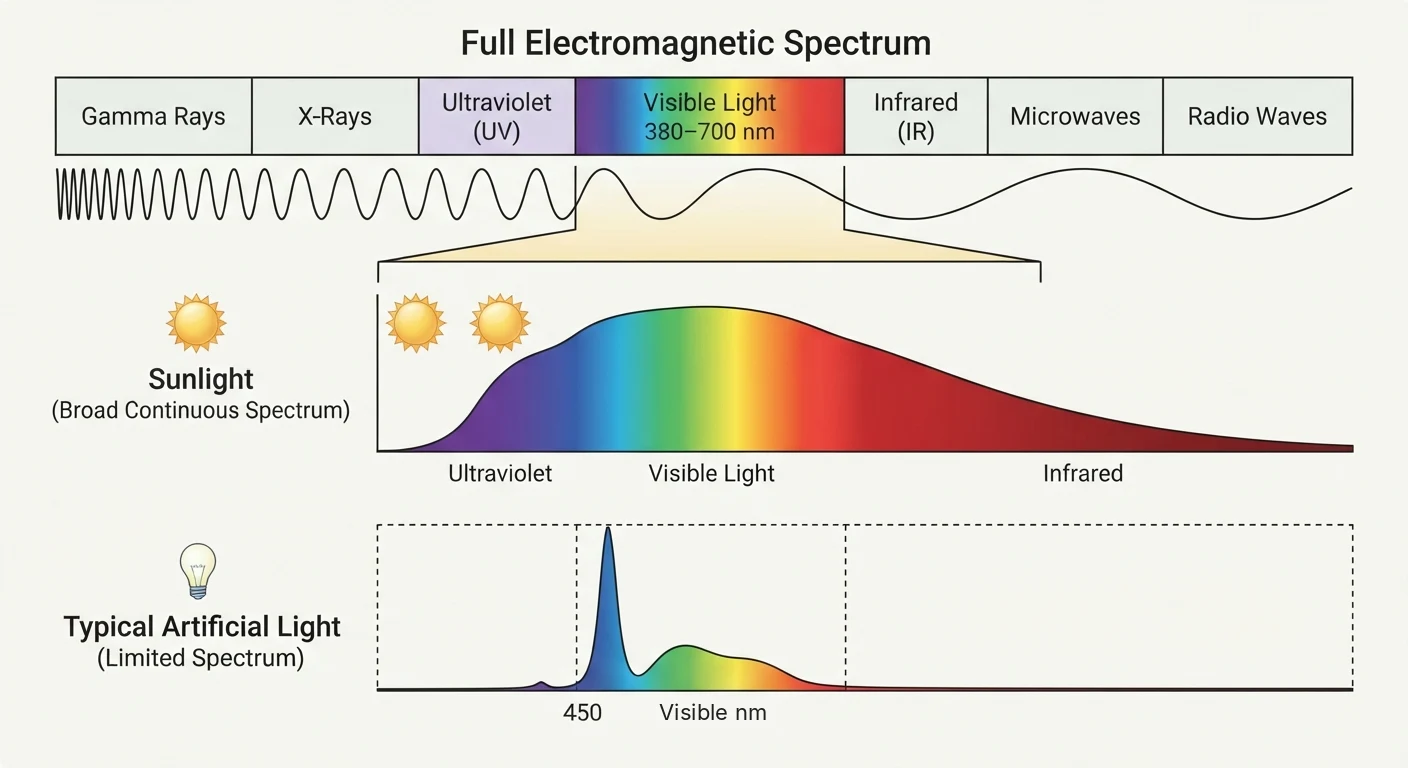
Our human factory setting has natural sunlight as the biological synchronizer throughout the day.
- The spectrum is broad
- The daytime intensity is high
- The nighttime intensity is low
- The wavelengths of light vary throughout the day.
These variations in natural light send appropriate signals to our body throughout the day via photoreceptors in the eye and photosensitive proteins in the skin.
Regular exposure to natural sunlight acts as a primary biological regulator across virtually every organ system, synchronizing our circadian rhythm, coordinating hormonal balance, regulating the nervous system, promoting restorative sleep, supporting retinal development, and driving glucose and cardiovascular metabolism.
Natural light exposure acts as the head coach of a football team. Proper exposure has the team playing like the NFL. Inappropriate exposure turns the team into a coachless gang of elementary kids at recess.
Spending days and nights bathing in indoor LED lights and screens creates a “biological twilight zone”.
- The light signal during the day is much lower than natural light, as the artificial light is too narrow spectrum and too dim in comparison to bright broad spectrum sunlight.
- The light signal at night is much higher than natural light, as the artificial light of our overhead LEDs, computers, phones, and televisions, is too Blue-enriched and much too bright.
This day and night shift from natural light flattens hormone rhythms, reduces sleep quality, strains the eyes, increases inflammation, and disrupts metabolic and emotional health.
Understanding Blue Light: Helpful During the Day. Disruptive at Night
Blue light (380–500 nm) acts as a biological timekeeper. It stimulates the melanopsin photopigment in the retinal ganglion cells of the eye. This directly communicates to our brain’s master circadian clock, the suprachiasmatic nucleus (SCN), that it is daytime and sends a signaling cascade for wakefulness and sympathetic mode readiness for the day. This is good during the day. There is no place for it at night.
- During the day, it positively boosts alertness, mood, and cognitive sharpness.
- During the night, it prevents the body from preparing for calm and restorative sleep.
Modern life has drifted from an outdoor lifestyle in natural light to an indoor lifestyle with immersion in overhead Blue-rich LEDs, as well as work and school requirements paired with communication and entertainment convenience that have us looking at electronic LED screens all day and night. Blue light exposure in the evening disrupts sleep, circadian rhythm, and metabolic control. Blue light exposure with prolonged screen use exacerbates digital eye strain, increasing stress on the body and mind.
Health Consequences of Natural vs. Artificial Light
Circadian Rhythm and Sleep
One of the most important functions of natural light is synchronizing our internal biological clock with the actual day-night cycle. The Cortisol and Melatonin cycle is the daily hormonal driver that has us ready to rock during the day and ready to rest at night. Blue wavelength light activates melanopsin in the retinal cells (which peaks in sensitivity around 480 nm), signaling the brain’s master clock (SCN) to activate two key pathways for wakefulness. This includes stimulation of the adrenals to release Cortisol (the hormone of wakefulness), and inhibition of the pineal gland in order to suppress Melatonin (the hormone of sleepiness).
Natural Light: Bright morning sunlight (high in Blue wavelength) activates the normal morning rise in Cortisol and alertness. As sunlight intensity decreases and its spectral composition shifts toward longer wavelengths in the evening (high in Red/NIR, low in Blue), the diminished signal for Cortisol stimulation and Melatonin inhibition allows Melatonin to rise and prepares the body for sleep. This natural progression of bright days and dark nights reinforces healthy circadian timing.
Artificial Light: Modern indoor lighting and electronic screens, with substantial short-wavelength Blue light, send the daytime signal to the brain long after sunset. This suppresses the Melatonin needed for rest, stimulates the Cortisol that brings nighttime stress, shifts the circadian clock, and can interfere with sleep onset and quality. Continued exposure to bright artificial light at night disrupts the natural hormonal transition between daytime alertness and nighttime recovery. Nighttime exposure to blue light alters sleep architecture. Clinical research published in Harvard Health notes that evening and overnight light exposure shifts sleep toward lighter stages and reduces restorative REM and deep sleep. White night light? No thanks.
Mental Health and Mood
Light is one of the most important environmental regulators of brain function and emotional well-being. Much of this is related to restorative sleep, but research is showing some direct neurochemical influence, as well. Light plays a role in regulating brain chemistry, emotional well-being, alertness, motivation, and cognitive function. Proper light exposure helps synchronize the neurological and hormonal systems that influence our mood and mental health, namely the neurotransmitters Serotonin and Dopamine. Serotonin stabilizes mood, calmness, and emotional resilience. Dopamine drives motivation, focus, and reward. In addition, UV exposure on the skin stimulates beta-endorphin peptides that elevate overall well-being.
Natural Light: Bright outdoor daylight supports healthy circadian signaling and influences neurotransmitter pathways like Serotonin and Dopamine involved in mood regulation. Consistent daytime light exposure promotes alertness, cognitive function, and emotional well-being. The importance of light is particularly evident in Seasonal Affective Disorder (SAD), for which bright light therapy is an established treatment.
Artificial Light: Spending most of the day indoors under relatively dim lighting (in comparison to the high intensity of daytime sunlight) deprives the brain of the strong daytime light signals needed for healthy circadian function and Serotonin and Dopamine pathways. Meanwhile, exposure to bright Blue-enriched artificial light at night bombs sleep by suppressing Melatonin, disrupting the circadian clock, and interfering with the restorative REM stage sleep that allows the brain to refresh. Beyond sleep disruption, nighttime light exposure can alter the timing of neurotransmitter signaling (Serotonin and Dopamine) involved in emotional regulation. Repeated circadian disruption and inadequate sleep are associated with increased irritability, anxiety, depressive symptoms, reduced emotional resilience, and impaired cognitive function.
Metabolism and Cardiovascular Health
Our metabolism operates on a daily rhythm. The liver, muscles, pancreas, and fat tissue all contain peripheral biological clocks that coordinate metabolic activity with our sleep-wake cycle. Natural light helps to synchronize these clocks to regulate glucose levels, insulin sensitivity, energy utilization, and cardiovascular function. The timing and spectral composition of light exposure provide important signals that help synchronize these processes with our daily activity and rest cycles.
Natural Light: The long Red and NIR (600’s to 800’s) wavelengths directly improve insulin sensitivity and metabolism through mitochondrial stimulation for improved cellular energy. The whole broad daytime spectrum of natural light (380 to 1,000+ nm) improves insulin sensitivity indirectly by synchronizing circadian clocks in the muscle, liver, and fat tissue to support healthy glucose regulation and metabolic timing. UVA wavelengths on the skin stimulate nitric oxide release into the blood stream for blood vessel relaxation and improved cardiovascular health.
Artificial Light: Insufficient daytime light intensity and variety combined with excessive Blue-enriched light exposure at night can disrupt circadian coordination between the brain and peripheral metabolic organs. Chronic circadian disruption is associated with impaired glucose regulation, reduced insulin sensitivity, altered appetite regulation, and increased cardiometabolic risk. Nighttime light exposure can essentially send the wrong metabolic signals at the wrong time, interfering with the body’s natural transition from daytime energy utilization to nighttime recovery.
Immune and Overall Health
Our immune system operates on a daily biological rhythm, with immune cell activity, inflammatory signaling, and tissue repair all influenced by our circadian clock. Proper light exposure helps synchronize these processes, supporting the body’s ability to maintain immune balance and respond appropriately to physiological challenges.
Natural Light: Consistent daytime sunlight helps synchronize the circadian system that regulates immune cell activity, inflammatory signaling, and tissue repair. Natural light also provides UVB wavelengths that enable the skin to produce vitamin D, an important regulator of immune function. Combined with adequate nighttime darkness and restorative sleep, this natural light-dark cycle supports healthy immune regulation and recovery.
Artificial Light: Chronic exposure to artificial light at night can disrupt circadian rhythms that coordinate immune activity and inflammatory responses. When this is combined with insufficient daytime light and poor sleep, normal immune regulation can become impaired. Chronic circadian disruption and sleep deprivation have been associated with altered inflammatory signaling and compromised immune function.
Vision and Eye Health
Light is essential not only for vision but also for healthy eye development and the regulation of biological processes within the retina. Our eyes evolved to function in a bright, broad-spectrum outdoor environment with changing light intensity throughout the day.
Natural Light: Bright outdoor light plays an important role in healthy visual development, particularly during childhood. Research consistently demonstrates that children who spend more time outdoors have a lower risk of developing myopia (nearsightedness), likely through retinal signaling pathways involving dopamine that help regulate eye development. Natural daylight also provides a broad spectrum of visible wavelengths that supports the normal function of the eye’s multiple photoreceptor systems.
Artificial Light: Modern lifestyle has dramatically increased our time indoors under relatively dim lighting while simultaneously increasing prolonged near work on computers, phones, and other screens. This combination of reduced outdoor exposure and excessive close-range focusing contributes to digital eye strain, visual fatigue, dry eyes, and potentially increased myopia risk in children. Although ordinary screen Blue light has not been shown to directly cause retinal damage, prolonged screen use and inadequate outdoor exposure create an unfavorable visual environment.
Central Nervous System Balance
Light is a powerful regulator of the central nervous system, influencing the brain’s internal clock, hormonal signaling, alertness, and the balance between sympathetic (fight-or-flight) and parasympathetic (rest-and-recovery) modes. A healthy light-dark cycle helps the nervous system transition appropriately between daytime activity and nighttime restoration.
Natural Light: Bright daytime sunlight reinforces daytime alertness and healthy circadian signaling, supporting the neurological and hormonal processes that promote activity and energy. As natural light diminishes in the evening, the reduction in daytime signaling allows the body to transition toward nighttime rest, supporting parasympathetic recovery and restorative sleep. This predictable daily light-dark pattern helps maintain healthy autonomic regulation.
Artificial Light: Spending the day in dim indoor lighting and then exposing ourselves to bright, Blue-enriched artificial light at night sends conflicting signals to the central nervous system. The brain receives insufficient stimulation to reinforce daytime alertness, followed by excessive stimulation when it should be preparing for rest. This can disrupt circadian timing, interfere with the normal autonomic transition between activity and recovery, and contribute to poor sleep, fatigue, and reduced stress resilience. The result? Sympathetic overdrive and the cascade of health issues that can arise from chronic fight-or-flight mode.
Action Items
This doesn’t have to be complicated or expensive. A few simple changes can make a meaningful difference.
- Sunrise! Make natural outdoor light exposure part of your morning routine. Ideally, get outside within the first 30–60 minutes after waking. Even 15 minutes of natural morning light in your eyes can make a big difference. Take the dog for a walk, drink your coffee outside, or do a little yardwork.
- Sunset! Get outdoors for at least 15 minutes as the sun approaches the horizon when you’re able. Sunset provides a natural transition in light intensity and spectral composition. It is a great opportunity to reinforce your body’s natural day-to-night rhythm.
- Quality light filtering glasses. I love my glasses from RA Optics! I wear my RA Optics sunset glasses (red lenses) every night once the sun goes down and this has made a dramatic improvement in my sleep readiness and quality. During days that I spend more time on a screen, I use my RA Optics daytime glasses (yellow lenses) to reduce eye strain and bring a sense of calm rather than stress.
- I got RA Optics glasses for my kids, too. While they don’t wear them as religiously as I do, we make it work. The loose rule is that if you are on a screen past sunset, you need to sport your Sunset glasses. I also just got them some Daylight glasses because they feel the difference in their sense of calm and reduction in eye strain when they are on their phone during the day- enough so that they started to steal mine😜.
- No night lights! Even the low lux of a nightlight has been scientifically shown to shift sleep architecture from restful deep stages to more restless light stages. Best is no night light, but if you absolutely need one, get a red night light and have it as dim as possible.
- Try to use incandescent lights in your house if you can still find them. In contrast to the spikes of short wavelength blue light in typical white LEDs with no longer wavelength Red and NIR, incandescent lights produce a continuous thermal spectrum with relatively little short-wavelength Blue light and substantial longer-wavelength Red and NIR. This makes incandescent a much better choice for evening light exposure.
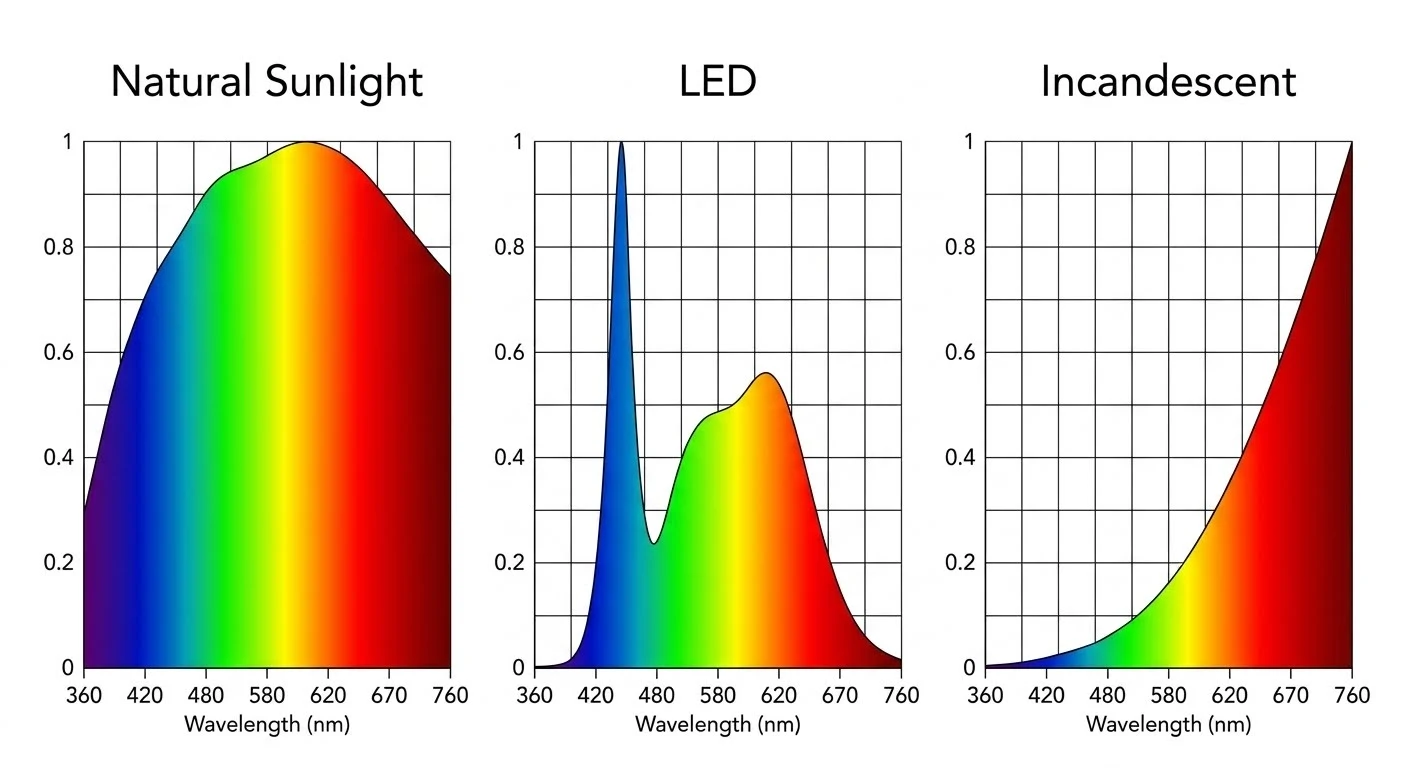
- Keep the lights in your house as dim as possible at night. Other options for home lighting include warm-white LEDs, dimmable lighting, and lamps that allow you to reduce overhead lighting as bedtime approaches. Remember, brightness matters just as much as color temperature. Even warm-colored lighting can interfere with sleep if it is excessively bright.
- Good news! For your next TV purchase, you can avoid the Blue-based backlighting that is standard in electronic screens! Get an OLED. There is no backlighting, so it is much less of the highly concentrated Blue wavelength. You can look for this in other electronics, as well.
- Red/NIR light panel. This can be as simple as a small portable box, to a larger panel designed to expose a greater area of the body. There is a wide variety of devices available. Just remember that the red-light industry is still somewhat of a wild west. Be wary of inexpensive devices making extravagant claims, as their advertised specifications often do not match their actual output. Look for brands that have had independent third-party testing of their devices, including measured irradiance and wavelength specifications, to assure that their actual output matches their claims. Also remember that a Red/NIR panel is not a substitute for natural daylight. It serves a different purpose: targeted exposure to specific wavelengths for photobiomodulation to support cellular health and function, and to counter the high exposure to short-wavelength artificial lighting indoors and on screens.
A Final Thought
We spend an enormous amount of time thinking about what we eat, what supplements we take, how much we exercise, and what products we put on our bodies.
Yet do we spend enough time considering the quality of light we expose ourselves to every single day?
Light is not just illumination. It is biological information.
Our bodies evolved under a predictable pattern of bright natural daylight and darkness at night. Restoring more of that natural pattern is one of the simplest ways to support our circadian biology, sleep quality, and overall health.
Get outside. Get morning sunlight. Enjoy the sunset. Dim the lights at night. Use light filtering glasses at night and/or on screens. Give your body the environmental signals it was designed to receive.
Sometimes, optimizing health isn’t about adding another supplement or buying another product. Sometimes, it’s about getting back to the basics.
Pop over to my Return to Factory Settings blog to dig into more areas to optimize your health by simply getting back to the basics.
✌️
~Dr. Mindy