
Wisdom Teeth Removal in West Des Moines
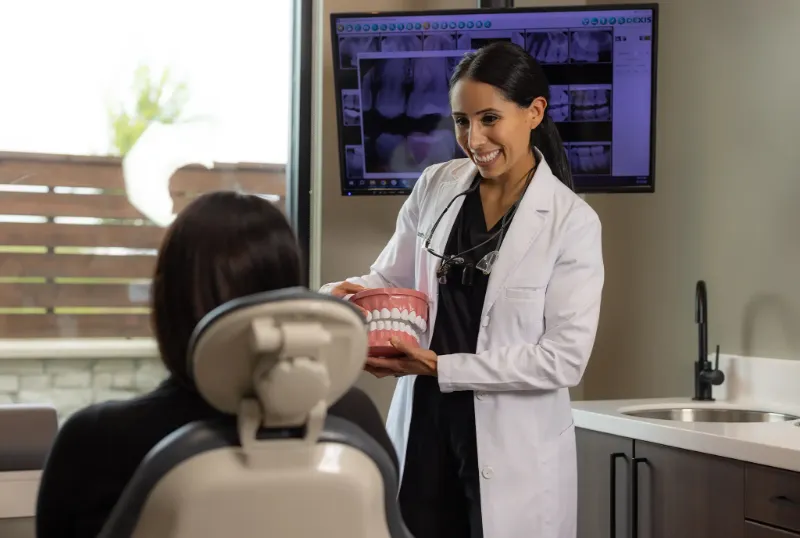
You probably have a few questions about getting your wisdom teeth out. Dr. Brad will answer them, then do your surgery right here in our office. IV sedation is available.
Wisdom teeth, done in our office
Wisdom teeth are the last molars to come in, usually in the late teens or early twenties. Many jaws don’t have room for them. A wisdom tooth that can’t come in all the way can trap food and bacteria, push against the molar in front of it, or stay buried in the bone.
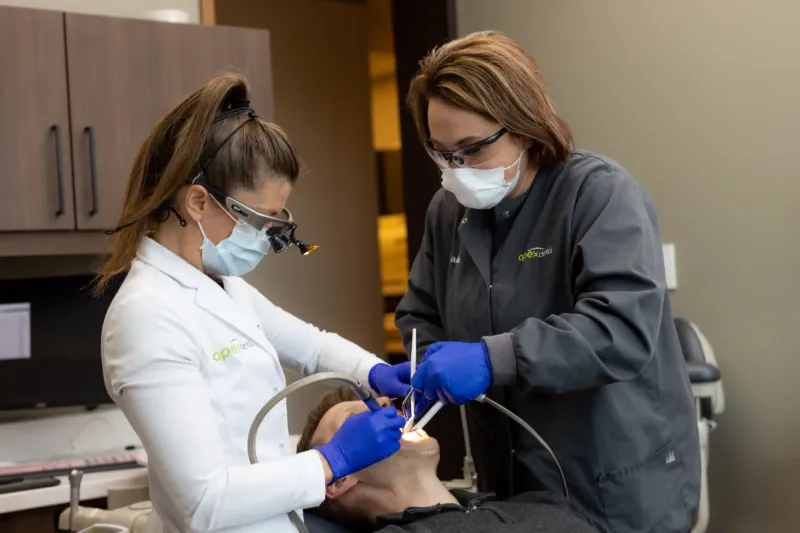
Dr. Brad Richtsmeier removes both simple and impacted wisdom teeth at Apex Dental. You see the same dentist at your consultation, your surgery and your follow-up.
- No referral needed. Call us directly to book a consultation.
- IV sedation in-house. No trip to another office to be sedated; Dr. Brad provides it here.
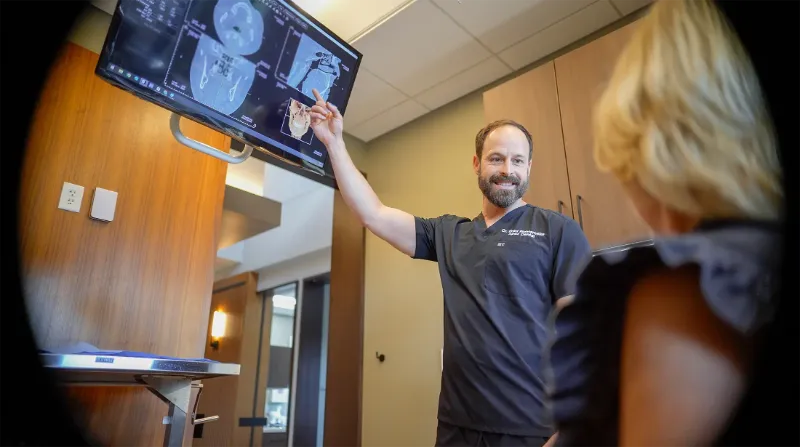
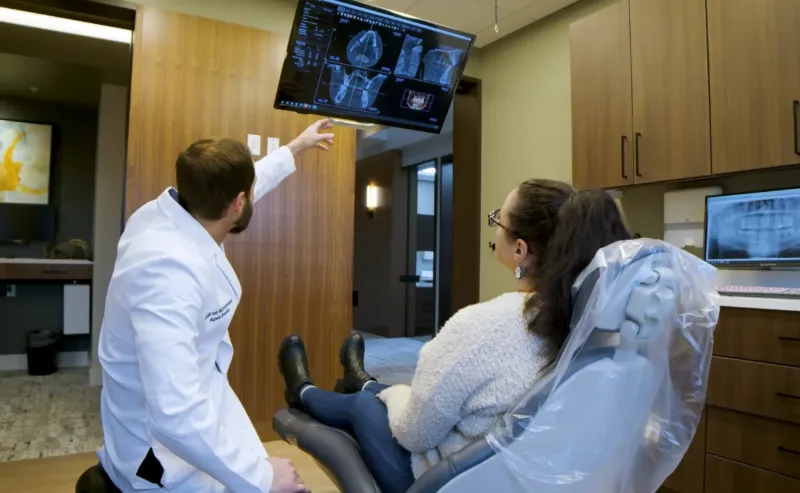
- Imaging first. A panoramic x-ray or 3D scan shows exactly where each tooth and its roots sit before we plan anything.
- PRF, if you want it. Platelet-rich fibrin, made from your own blood, can be placed in the sockets. It’s optional and priced separately. Learn about PRF
Do my wisdom teeth need to come out?
Not always. If your wisdom teeth have come in fully, sit straight, and you can keep them clean, they may be fine to keep. We’ll watch them on your regular x-rays and tell you if that changes.
Removal usually makes sense when a wisdom tooth:
- Keeps causing gum infections around it (pericoronitis): pain, swelling, a bad taste, or trouble opening your mouth
- Is causing decay or bone loss on the molar in front of it
- Has a cyst forming around it: a fluid-filled sac that slowly grows in the jawbone. These often show up on an x-ray before they cause any symptoms.
- Has broken partly through the gum but can’t be cleaned
Timing matters. In the late teens and early twenties, the roots are shorter and the bone is softer. Removal is usually simpler and healing quicker at that age. Adults can still have them removed; healing tends to take a little longer.
Impacted wisdom teeth
An impacted wisdom tooth can’t come in all the way because something is blocking it, usually the tooth in front of it or the jawbone. There are three kinds:
| Type | Where the tooth is | What it means |
|---|---|---|
| Soft tissue | Out of the bone, still covered by gum | Hard to clean; prone to infection |
| Partial bony | Partly in the jawbone, may poke through the gum | Can’t come in fully; traps food |
| Full bony | Completely inside the jawbone, sometimes at an angle | Needs more involved surgery to remove |
Your x-ray or 3D scan shows which kind you have, the shape of the roots, and how close they sit to the nerve in your lower jaw. You’ll know how involved removal will be before you decide anything.
If the roots sit right against the nerve, Dr. Brad may recommend a coronectomy. He removes the crown of the tooth and leaves the roots in place, so the nerve isn’t disturbed. If he thinks a specialist is the better choice for your case, he’ll tell you and refer you.
For other teeth, see Tooth Extractions.

Staying comfortable
You choose how relaxed you want to be. We’ll talk through the options at your consultation.
- Nitrous oxide (laughing gas). Takes the edge off. It wears off within minutes, so most people can drive themselves home.
- IV sedation. Medication through a small IV in your arm. You keep breathing on your own and can respond, but you’re deeply relaxed, and most people remember little or nothing. You’ll need a responsible adult who waits in our office during your procedure, drives you home and stays with you for the rest of the day.
Most of our wisdom teeth patients choose IV sedation; some prefer nitrous.
About IV sedation at Apex
Dr. Brad holds an IV sedation permit from the Iowa Dental Board and is a member of the American Dental Society of Anesthesiology.
A trained team member watches your vital signs the whole time you’re sedated, and you rest with us until you’re ready to go home.
What to expect, step by step
- Consultation ($55, plus imaging if needed). We take a panoramic x-ray or 3D scan, check your teeth, and go over your health history and medications. If you’re choosing IV sedation, we’ll do the sedation consult at this visit too. You leave with a written plan and cost estimate.
- Before surgery. You’ll get a written checklist. The main points for IV sedation:
- Nothing to eat or drink for 6 hours before, except a little water with your daily medications. We schedule sedation in the morning, so this usually just means skipping breakfast.
- No caffeine or alcohol for 12 hours before. Afterward, skip caffeine for 12 hours and alcohol while you heal.
- No grapefruit, grapefruit juice or St. John’s wort for a week before and after.
- Bring a responsible adult who can stay in the office until you’re done.
- Leave contact lenses, jewelry and watches at home, and skip the nail polish.
- Surgery day. Plan on about 90 minutes in our office. Once you’re relaxed and numb, Dr. Brad removes the teeth. He places PRF if you chose it, plus stitches if needed, which usually dissolve on their own. You rest with us until you’re ready to go home.
- Follow-up. A short check within a few days. If anything worries you before then, call us at 515.224.1618. After hours, leave a message on our emergency voicemail and a doctor will call you back.
Recovery: the first week
Plan to rest for the first 24 to 48 hours. You’ll go home with our written instructions; here’s what to expect.
- First 24 hours. Some oozing is normal. Bite on moist gauze with steady pressure for at least an hour, and repeat with fresh gauze as needed; a damp black tea bag also helps. Keep your head raised and use ice 15 minutes every half hour.
- Days 2–4. Swelling is usually at its worst by day 2, then starts to go down. Soreness can build for three or four days, then eases.
- After that. Most people are on the mend, and you can slowly work back to your normal diet.
Food. Stick to liquids and soft foods for the first week. After sedation, start with water, clear juice or broth, and skip heavy or greasy foods that day.
Pain. Most patients do well alternating ibuprofen and acetaminophen (Tylenol). We’ll give you the exact plan.
Avoid while you heal: straws, carbonated drinks and hard spitting, which can disturb the blood clot in the socket, plus smoking and alcohol, which slow healing. After sedation, don’t drive or do anything that needs you alert for 24 hours.
Keeping it clean. Brush gently. Starting 24 hours after surgery, rinse with warm salt water (1 tablespoon of salt in 8 ounces of water) 3 to 5 times a day for a week.
Dry socket. Throbbing pain that starts on day 2 to 4 and spreads toward your ear may be a dry socket. It usually heals on its own, but call us so we can help with the pain.
Call us at 515.224.1618 if bleeding or pain can’t be controlled, swelling keeps spreading or growing, or a medication gives you a rash or itching. After hours, call the same number and leave a message on our emergency voicemail. A doctor will call you back.

Cost, insurance and financing
We don’t publish one price, because it depends on how many teeth come out, how impacted they are, and which sedation you choose. You’ll get a written estimate at your consultation, before anything is scheduled.
- Consultation. $55. If you don’t have recent x-rays or scans from another office, imaging runs $150 to $410, depending on the type you need.
- PRF. Optional, priced separately.
- Insurance. Many dental plans cover part of wisdom teeth removal. We’ll check your benefits and file the claim for you.
- HSA and FSA. You can use either.
- Financing. We offer Cherry and CareCredit. See monthly payments with our calculator.
Wisdom tooth hurting right now?
Call us at 515.224.1618. We keep room in our schedule every day we’re open for patients in pain. Swelling in your face or jaw, a fever, or pain that keeps you up at night all mean you should call right away.
If swelling makes it hard to swallow or breathe, go to the emergency room.
FAQs
Do I need a referral?
No. Call us or request a consultation online.
Will I be asleep?
IV sedation isn’t general anesthesia. You’re breathing on your own and can respond. Most people are relaxed enough that they remember little or nothing.
Do you take out all four at once?
Often, so you have one surgery and one recovery. Not always, though. Dr. Brad will recommend only the teeth that need to come out.
Should my teenager’s wisdom teeth be checked?
Yes. We watch wisdom teeth on routine x-rays and 3D scans as they develop. If we see a problem coming, we’ll talk with you about timing.
What if I’m older and never had them out?
If they aren’t causing problems, you may not need to do anything. If they are, removal is still very doable, but healing usually takes longer than for a teenager.
Can I drive myself home?
Not after IV sedation. You can drive again the next day. After nitrous oxide alone, usually yes.
Still have questions? Let’s talk.
Call 515.224.1618 or send your question with the request form below. Consultations are usually available within a day.
Request Appointment
Make your next appointment and experience dental care that puts YOU first.
725 S 51st St, West Des Moines, IA 50265

725 S. 51st Street, West Des Moines, IA 50265
515.224.1618
Mon–Thu: 8 AM–5 PM
Fri: 8 AM–noon (phone only)